Circle Time from Preschoolers and Peace: Review

Website logo photo circletimelogo2_zps58ab71e5.jpgMy girls are only two years apart and we school all together in the same room at the same time, but for the most part their learning has been separate. With the exception of morning devotions which we have done for a while, all other subjects are separate. To be honest, it was easier this way. I could focus on teaching one while another did independent work. This has worked very well so far and I’m not anxious to change up our structure at this point, but I do see the benefit of corporate learning especially now that my youngest will be entering her k-4 year.

Circle Time Book Logo photo CircleTimeLogo_zps63dd95c9.jpg
I was quite excited to have the opportunity to review CircleTime ($4.99) by Kendra Fletcher of Preschoolers and Peace. Before I read e-book I thought it would apply mostly to Grace (rising K-4) and not so much Rose (rising 3rd grader) or Beth (rising 1st grader). After all, traditional school circle time is pretty much reserved for pre-kindergarten and sometimes kindergarten. I was pleasantly surprised to find this is intended for all of your children to learn together, no matter their ages. I love this!

It took me about 25 minutes to read the 33 page PDF eBook  which I was immediately excited to start implementing! Unfortunately we were in Tampa at General Council for the Christian and Missionary Alliance, so implementation wasn’t going to happen for a few days. Instead I spent a few hours planning out what I wanted. I followed the guidelines for planning your circle time although I did not use the included forms. I prefer to keep everything planned out on my computer for quick access. Even though I didn’t use them, the forms are a great starting point and I modeled my own plan after the. 

My list of what I wanted to include started getting long…really long. There have been several things in the back of my mind which just don’t fit in the day anywhere. They are good things, but not absolutely needed at this age. I broke down what I would like to do each day, just like the author suggests. Our Mondays and Wednesdays are different anyway because both Rose and Beth will be taking classes at Deerstream Learning Center in the fall. This means our circle time is lighter on those days and longer on Tuesdays, Thursdays, and Fridays. I estimated my plan to take about 15-20 minutes on Monday and Wednesday and closer to an hour on Tuesday, Thursday, and Friday.

I made out my plan, decided what day we’d cover what subjects, and making notes of what I wanted to go over under each subject. Then I had to decide on a name for our circle time. I didn’t want to use the name circle time because I wanted to be more creative. We’ve been learning some Latin which the girls have absolutely loved, so I settled on…

phari mane conventu

…which is Latin for Lighthouse Morning Meeting. The reason for the title is our school’s name is Lighthouse Christian Academy. This is not only fun to say, but the girls won’t outgrow it as we move forward throughout the years. I put my plans, ideas, and lists into this notebook and was soon on my way!


The next step for me was to create a board I can change and use each week. I don’t have everything I want to cover each week on here, but it is a starting point and a nice visual. I am including some things like artists, North Carolina history, hymns, and composers. My girls watched me piece it together and were equally anxious to give our morning meeting a try. As with everything I plan to be flexible and see what will work best as we move forward throughout this year. This is already an excellent addition and I anticipate it will only get better! 

The Circle Time eBook is a great resource to help you plan and implement your own circle time. There are no limitations to what you can do with this! Don’t forget to check out other reviews from my Crewmates!

Photobucket

 photo DisclaimerGraphic1_zpsf612f371.gif

Christi the Coupon Coach: Review

 photo christithecouponcoachlogo_zpsbe2a70cc.png

Money…sigh…if only we could homeschool without it! There are a lot of free resources out there, but I prefer to invest in materials I believe in rather than making do with what I have to for free. We are always on the lookout for ways to save and stretch our dollars. One of things I have avoided though is couponing. It just didn’t appeal to me for a few reasons, but the biggest one was the time. Working two part-time jobs in addition to homeschooling doesn’t leave a lot of extra time to coupon and get good enough at it to really see some savings!

 photo christithecouponcoachbook_zpsfd7911d1.jpg

Christi the Coupon Coach‘s book, Couponing Made Simple lives up to it’s title! This simple step-by-step guide will take you from defining the terminology of experienced couponers down to how to make the most of your deals. For just $18.00 for the hard-copy of the book or $4.99 for the e-book version you can get all of the information you need to get started.

Read this book I felt as if Christi is sitting down at your kitchen table chatting over a cup of tea and some scones. Her easy writing style makes you feel as if you know her personally.

I like the step-by-step instructions for how to set up a couponing system along with several options. Although I’ve never attended a seminar,  I have read other coupon how-tos and tutorials which made my mind spin. Their systems were complex and overwhelming to the beginning couponer with only a handful of coupons to their name. By offering a variety of ideas Christi also encourages the reader to find what works for them, even if it means creating something different.

I was finally able to really understand the ideas behind coupon stacking and how this was supposed to work. Unfortunately, many of our local stores which used to honor this system have now done away with this. The stores which do allow stacking are a bit more of a drive, so I sadly will not be able to benefit from this! We are also having stores now stop doing double and triple coupon weeks which can be an excellent time to stock up on a particular item. Some stores are not allowing rain checks, or only a limited number of rain checks as well. I’m not sure if this is a national trend or just local, but it is a bit disappointing to feel so well equipped, but without all the same resources as available previously.

Several years ago my husband and I used to buy the Sunday paper with coupons, but for a stretch of a few months the coupons were never inside! This was happening at several stores close to us and for delivery. When my husband called to question this he didn’t really get any answers, so we stopped trying. I also prefer not to buy many of the products in the coupons in the paper and have opted to start making homemade versions of many or our favorite foods. For this reason we mostly use computer-printed coupons and the ones printed for you at stores as you checkout. This does not grow our stash very quickly, but for us it makes the most sense.

Our best deal after I started implementing Christi’s method came from Target for light bulbs. I’m not a fan of the new fluorescent bulbs for a few reasons. First, fluorescent light has always tended to give me a headache. I don’t know why, but it does. I also have found the 10-year life expectancy on these things has never happened for us. We spent lots of extra money, only to have the bulbs last a year on average. This is certainly NOT cost-effective considering their high price tag! So, with Christi’s method in mind, we set out to find some light-bulbs with a coupon that had printed out the last time I was at Target.

We had a $2 coupon off the lightbulbs which were $9 for a pack of 4. We also received a $5 gift card when we purchased 2 of them as well as another $3 off coupon! We went back and bought more, receiving another gift card. It wasn’t as good as free, but It wasn’t a bad deal!

One are I’m going to look more extensively into couponing is our toiletries and makeup. I know I should be able to get our toothpaste, shampoo, and many other items cheaper than I do, it will just take a little more effort on my part by checking out sales and deals each week. I’ve decided for food, I still prefer to just go to one store and not worry about coupons for the most part. I’m still in the process of setting up my “system” but I’m hoping to take our $50 budget for toiletries down to $25 or less each month. With four girls in the house I have to assume this is only going to creep higher!

Christi has also devoted a portion of her site to updated couponing sites. This information was not included in the book as the internet is constantly changing and the sites could potentially become outdated as website names change and sometimes close. I love how thoughtful she was to do this!

For anyone looking to start out couponing or to better understand the world of couponing, this book is an excellent buy! Don’t forget to check out the other reviews from my Crewmates!

Photobucket

 photo DisclaimerGraphic1_zpsf612f371.gif

Little Linguists Spanish and Wake Up Class Bible from Gallopade International: Review and Giveaway!

(Don’t forget to read through to the bottom for the giveaway!) 

One of the fun things about homeschooling is supplementing our regular curriculum. Many homeschoolers have a core curriculum they love, but no one curriculum covers every subject exhaustively. Dipping our toes into a variety of subjects has given me insights into my girls’ individuality as well as inspire us to dig further into areas I hadn’t considered before. No matter what subject you are looking to explore further, Gallopade has something for you! 

I’m not looking to start a full-blown language curriculum within our homeschool yet, but I do like the idea of introducing a variety of languages early. Gallopade International’s series, Little Linguists, provides a wonderful way to toe-dip into 10 different languages! This is not a full-course curriculum, but it works beautifully as an introduction or supplement to what you are already doing.

This series sounds fun before you even open the books. Titles like Do you Speak Spaghetti? (Italian), Of all the Gaul! (Latin), and Say WHAT when you sneeze?” (German) invite students to have fun as soon as they see it. These reproducible (Yay for reproducible!) books help children learn other languages through context clues, language similarities, and fun activities. Also included is cultural and geographical information which tie the language to its country of origin.
My girls constantly ask me how to say all varieties of words in different languages. Although I was in the Spanish Honor Society in high school, I must confess I remember very little and usually have to look things up. I can still translate minimally, but recalling words was never my strong point. Uh, Oh, Amigo! was so much fun for my girls! Although school happens all together, we rarely do lessons where we are learning the same thing at the same time due to their varied levels of learning. 
 Because this is not a full curriculum you do not have to go in order in the workbook. I plan to continue to do one page a week when our school year begins to give them consistent exposure to foreign languages. The activities include everything from matching, to bubbles, to fill-in-the-blank. They can be used alone or as a follow-up to a language lesson. Their uses are really unlimited. 
Beth was so surprised and excited she could understand Spanish in just the first sentence she read! One of the first pages we used has sentences written in English and only one word replaced in Spanish. I wasn’t sure how they would like this, but they were delighted! Now Beth consistently talks about living in a casa. I didn’t formally teach her casa is house in Spanish, but the format of the activity led her to logically figure it out. 
We will also be using From Russia With Love both at home and at church as we partner with a family currently in Russia serving God. I have come to really love this series and plan to purchase more in the future! 
Another new product from Gallopade International is a series called Wake Up the Class. These themed cards provide questions to engage children academically as soon as formal learning time begins with fun questions. There are nine different subject sets including history, critical thinking, writing, critical thinking, and Bible. We had the chance to review the set of Bible cards.
Each set is color coded so if you purchase multiple sets you can easily keep them organized. The content of the Bible cards would prohibit them from being used in most public school classrooms, but these would be a fun addition to a private school class, Sunday school class, or how we use them, in homeschooling. 
My girls tend to be morning people and we don’t typically have a hard time getting started on our lessons each day. I like to use these kinds of activities as a break from the routine or in between subjects.
The questions are a fun jumping off point for discussions as well. For kids with a solid biblical knowledge base some of the questions will be more like review, but in addition to the answer the reverse side of the cards also have an activity or discussion jump-off for further exploration. These questions have been well-thought out and will certainly engage your kids! 
For anyone in Tennessee and Georgia stop and say, “Hi!” at the Gallopade booth at the CSTHEA Homeschool Show in Chattanooga and the Southeast Homeschool Show in Atlanta. Don’t forget to tell them I sent you!
Now for the giveaway! 
There are two prizes to win and two separate winners! Make sure to share with your friends for extra entries.

Life-Pain

Life-pain comes all at once. I’m home recovering from thyroid surgery to remove a rather large nodule and find out a dear friend’s little 6-year-old boy is in the ER awaiting a CT scan to diagnose the severity of a tumor on his kidney (update: It is cancerous). I find out my husband’s uncle was having a heart attack this morning that was thankfully stopped, but needs hospitalization. Four good friends have had surgery within the last two weeks.

And it is raining.

The sun hasn’t shown it’s light for more than a day at a time over the last several weeks. The sky is gray and dark and gloomy. The earth has been muddy slosh, not able to absorb all that wetting.

Even in the rain…
the birds sing
the vegetables grow
the flowers bud

….because of the rain.

Life-pain. Moments you never want to experience, but you do. Sickness, abandonment, depression…life-pain. Moment by moment we draw our breath and seek peace. We cling to hope, long for assurance. We wait for the words which will finally bring relief. 

Through it all we have Emmanuel…God with us. Never am I more keenly aware of Emmanuel than in the middle of pain. C.S. Lewis said, “God whispers to us in our pleasures, speaks in our conscience, but shouts in our pains: it is his megaphone to rouse a deaf world.” (The Problem of Pain). 

Pain and God. We don’t like to pair the two. We know God so loved the world that He gave us His only Son that whosoever believes in Him will not perish but have everlasting life and that doesn’t match up with pain. In the midst of pain we must trust on the God who loves the world even when our world feels anything but loved.

God is love. The prince of this world is pain. We must never confuse the two. In our pain God is there, holding us, loving us. We don’t always feel it and so we must rely on others to be God’s hands and feet to hold us and love us. 

Be the love of God to those experiencing life-pain. Pray for them when they can’t pray. Cook for them when they are hungry. Hug them while they weep. 

God speaks during the pain, but we most often hear Him after the pain. After the rain. When the birds fly, vegetables ripen, and flowers blossom. Life-pain is inevitable…we are none immune. Stay close to God now before it arrives so you have hope when it does.

Children’s Atlas of God’s World from Master Books: Review

I’m so incredibly excited to be posting my first review for the Moms of Master Books team! Being part of this team has been one of my hopes since shortly after beginning my blog. Master Books has become my favorite publishing company since beginning homeschooling and being part of their review team is simply a dream come true!

This first book I’m reviewing is the Children’s Atlas of God’s World from Master Books (a division of New Leaf Publishing). The first place I go to now for my geography, history, and science resources in Master Books, but I hadn’t considered an atlas from a Christian worldview before. For the most part a traditional atlas will give factual information rather than that from a secular perspective, so I was curious to see what one from a biblical perspective would hold different. Boy was I excited when I found out!

The book is divided into continent sections where an overview of the continent is given. Following this page several of the countries are highlighted. For each country the statistics are listed as well as the country’s flag, map and beautiful pictures of the area. Historical and geographical information is provided in a child-friendly manner in short paragraphs, easy for young readers to explore on their own. Another aspect I like is the inclusion of biomes which teaches more about the land and climate of the region.

My favorite part is the inclusion of Christian History and traditions. With this information children are told when missionaries first arrived as well as how God is working in the country. This is a blessing in our home because missions is something we are very passionate about. In addition to using this in our home, I plan to take this to our monthly women’s meeting where we focus on missionaries and their work around the world. This year I’ll be heading up a portion of the meeting designed to help our children become more mission-minded. This Atlas will give me a great starting point for discussion with the kids in our church about the world and missionaries.

This Atlas will be a great resource to any home whether you homeschool or not. The beautiful pictures compliment the accurate and interesting information. I’ve enjoyed reading it as much as my girls! Master Books has scored once again with another new resource for kids to explore the world around them from a Christian worldview.

Disclaimer: I received the Children’s Atlas of God’s World as part of the Moms of Master Books Team. I was not required to give a positive review. I was not compensated in any other way. 

Arithmetic Village: Review

Have you ever wished math could be, well, less math-like? My husband loves the predictability of numbers and operations whereas I feel stifled when I look at a page full of numbers. For us right-brainers math can feel tedious and in need of a giant boost of something creative. I stumbled across something wonderful one day as I browsed Facebook: Arithmetic Village…math for the right-brains!

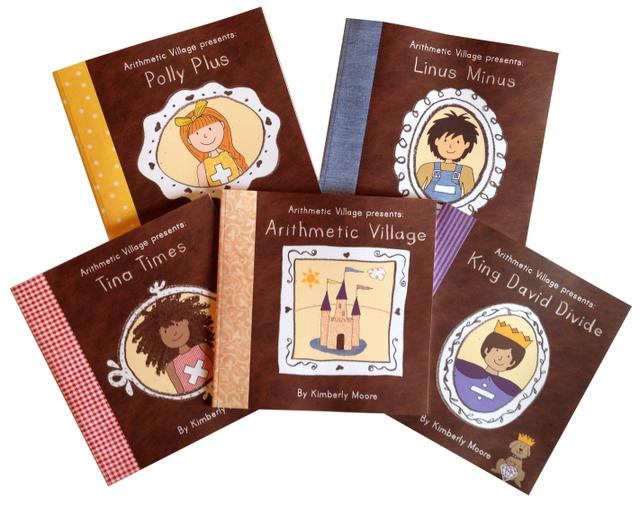
Arithmetic Village is a series of beautifully illustrated books which teach mathematical concepts in a very creative and unique way. Children learn mathematics with hands-on activities which excite and engage like no other math manipulative I have seen. While this is not a stand-alone mathematics curriculum it is a wonderful supplement to any curriculum out there and is especially perfect for the right-brained learner. The unique blend of story-telling, rhyme, role-play, and tactile learning experience makes children want to do math!

The five books in the series cover place value, addition, subtraction, multiplication, and division inviting children to actively participate in the learning rather than just be told what each operation means. In addition to being beautifully illustrated these sweet stories are told in rhyme which often creates a more memorable learning experience for children. 
Are you intrigued yet?
You can purchase hard-copies of the books or printable pdf files with directions. Be aware this will take a large amount of ink, particularly yellow, if you want them to turn out nicely. The pdf files also must be cut and bound by hand, but the payoff for this effort to make them nice is well worth it! 
My sweet husband bought me a new paper cutter for this project…and then I convinced him to cut them for me. Left-brain precision at its finest! We used card stock and a long stapler for binding. There are directions for printing here as well as how to sew the binding by hand.
First the children decorate their treasure box. Since there are three little girls in our house I opted for a larger treasure box for us all to use together. I used wedding favor bags and red vase gems from Walmart for the jewels and bags. All five books and 10 sacks of 10 gems fit neatly inside. I also have a small basket of loose gems in the box and as soon as I have a chance I’m going to add in several miniature treasure chests. The girls loved decorating the box. I used tissue paper and modge podge to give it a stained glass look and we added on the lettering with stickers we already had. 
Now that the box is done, let the fun begin!

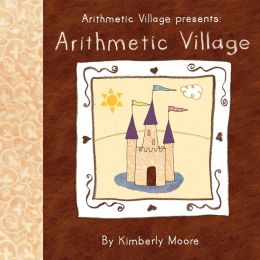
I read the girls the first story in the set, Arithmetic Village. Then we acted out what the story told of gems falling from the sky while the villagers slept, the villagers collecting the jewels and putting 10 in each sack, and delivering sacks to the king. Grace and Beth especially liked this part. Grace is three and has been counting well for a while now. She was excited to show off her counting skills! This first book introduces the ideas and main characters who reside in Arithmetic Village and will reoccur later in the series. 
Each of the following books deal with a different ma thematic operation. We found out more about Polly Plus, Linus Minus, Tina Times, and King David Divide as we read through the series. The girls enjoyed the stories immensely and have read them several times on their own. 
Another wonderful aspect of these unique learning tools is the variety of free ideas and activities provided through the Arithmetic Village website, blog, youtube channel, facebook page, twitter page, and pinterest page. You will never run out of ideas! We used several of the printable work pages to aid in our learning endeavor. Here Beth is practicing place value by using the rules learned in Arithmetic Village and the printable worksheet available on the website. 

Rose and Beth took turns helping Grace learn to add and subtract. It was so much fun seeing Grace begin to understand the concepts of addition and subtraction at 3 years old. I wish I’d had this resource when my older girls were just starting out with mathematics instruction! 
Our family has been greatly blessed by this wonderful resource and I know yours will be too. Math manipulatives are known for helping understand concepts, but I have yet to see one which engages my girls as much as Arithmetic Village has. How do I know they love it? I’ve been asked, “Mommy, can we play with the treasure chest and gems again? Where are the books?” almost daily. I think this resource should be in every homeschool and classroom and will greatly benefit every child whether they are right-brained or left-brained! 
Have you used Arithmetic Village? What is your favorite part of this resource? 

Disclaimer
I received the Arithmetic Village series in pdf form in exchange for my honest review. I was not required to write a positive review. No other compensation was received.

Stewardship and Pot Holders

Update: As of this week Rose has given $17.00 towards our Great Commission Women‘s missionary fund!

My sweet Rose, who will turn 8 next month, has always had an excitement for missions. We give money as a church to what we call the Great Commission Fund. This provides financially for missionaries so they are not burdened with raising their own support. We also give to a more targeted project through our women’s ministry. This year the targeted project was to help raise money to start an Awana program in Chile. This captured Rose’s heart and after she had already earned money around the house doing extra chores she asked if she could do more.

On her own my little entrepreneur asked to sell pot holders woven on a loom by her hand. After she first asked to sell them by the roadside, we quickly decided we should help guide her in this endeavor! Together we had to discussed how much to charge, how to advertise, and how she would get the pot holders to her customers. With only a little minimal guidance from us, Rose launched her first business with gusto!

Rose’s tithe and missionary jars

The first question I asked her was how much she wanted to give to missions from each pot holder. She sort of gave me a guilty look and said, “Is it okay if I don’t give everything to the missionaries?” I assured her that was okay and she chose to give 20% of her total earnings. We talked about tithing and how our family gives a tithe first then gives to missions in addition. Our family practices tithing. We use 10% as a guideline to represent our first fruits. We also give to missions as a family through faith-promise giving meaning that we choose an amount to give to missions based on the faith that God will provide, not as a calculation of how much we will have left over at the end of the year. This was an excellent opportunity to explain some of these things in more depth to our daughter.

Rose started this business at the beginning of May. So far she has made 27 pot holders in just 2 months! This little business of course taught her about financial responsibility and stewardship, but other lessons followed as well. The ones about responsibility and work ethic top the list. She took orders and kept track of who ordered what colors and how many. She was quick to make each one and would make sure to get the order complete within a week. She used some of her income to purchase a more sturdy loom when her original plastic one broke. She worked as we traveled, worked as she watched television, and worked during the girls’ afternoon quiet time. She worked diligently and happily, joyfully giving what she had earned each Sunday.

Rose sold each pot holder for $2.50

This small enterprise has earned  just over $13.00 to help start the Awana program in Chile. This is a modest sum, but I am reminded of the young boy who went out one day, many years ago, with just a small lunch. My never-changing Jesus can multiply money the same way He did the loves and fish those many years ago. Whether she knows the full impact of her efforts here on earth doesn’t matter. Her heart has learned a lesson beyond mere business sense and responsibility. She has been touched compassion and moved to make a difference. Please pray with me that her dollars will be multiplied just like unnamed boy in Scripture.

PreScripts Cursive Letters and Coloring from Classical Conversations: Review

Logo photo classicalconversationslogo_zps461acbc8.jpg
There is much debate currently over whether cursive is relevant to our tech-savvy society. Advocates on both sides spout figures, facts, and passionate discourse. My reasons for firmly staying the course with cursive have nothing to do with the latest trend in education or the movement from homeschoolers to teach more traditional subjects public schools ignore. My reasons are much more personal. One of my most treasured belongings is my grandmother’s cookbook. I discovered after receiving this that there were several handwritten recipes she had tucked away into this book. Although I can’t talk with her anymore because she came face-to-face with Jesus when I was just a little girl, I feel as if she is chatting with me as I read over her recipes, hastily written on whatever was nearest. I know she probably didn’t think her granddaughter would be saving and cherishing these handwritten mementos, but they are so very dear to me. I want my daughters to be able to read these and other inscriptions from their own history. 
 photo classicalConversations-lettersandcoloring_zpseefb78a5.gifChoosing a handwriting course is as daunting as choosing reading instruction! While I have been satisfied with our current books, I hadn’t yet felt overwhelmingly in love with them as I am with some of our other curriculum. I was excited to review Prescripts: Cursive Letters and Coloring from Classical Conversations. I have a good friend who uses Classical Conversations for their core curriculum. I knew it would be solid and I was interested to see how it differed from our current handwriting curriculum. 
The first thing which I noticed, which thrilled Beth, was the coloring after each lesson. I have never known a child who loved to color as much as Beth. She colors several pages every day by choice in one of our many coloring books. Her previous handwriting instruction included coloring and that was usually her favorite part of the day! Combining coloring and handwriting is the perfect mix for her. She asks daily now if she can work on cursive and on the rare occasion I initiate cursive practice I am met with jumps and squeals. Seriously, I may have loved cursive, but this girl gets crazy excited about these lessons! 
I am also pleased with how young cursive instruction begins with Classical Conversations. Prescripts: Cursive Letters and Coloring is in intended for children ages 3-7. Three???? I love this! One of the challenges with handwriting for Beth in the past is that she always wanted to decorate her handwriting, adding curly cues, smiley faces, and hair to many of her printed letters. I hate to squelch her creativity, but this tends to drag handwriting out rather long and she is typically more concerned with her decorations than correct printing form. Teaching cursive younger removes this issue for a creative girl like Beth.
I also like that the letters are taught in a traditional ABC order. Our previous curriculum taught letters based on similar type, which made logical sense to me as an adult, but seemed to confuse my oldest daughter as we progressed through cursive the first time.. The capital letter is taught first, followed by the lower case of the same letter. In between is the previously mentioned coloring page. 

Beth was clearly ready for cursive instruction for her K-5 year, but I hesitated to begin because our old program encouraged waiting until 2nd or 3rd grade. I also know our public schools teach cursive in 3rd grade now. I am finding more and more freedom as I continue to homeschool realizing that just because something is traditionally taught at one level does not mean I cannot teach it sooner, or later if needed, at home. I plan to change handwriting curriculum and stick with Prescripts in our homeschool as we move forward. 

Check out more reviews here from my Crewmates! Photobucket

Teaching the Classics from Institute for Excellence in Writing: Review

 photo homepage_logo_zps79f1e89a.jpg

My favorite subject to teach is literature. In high school I couldn’t wait to go to my senior English class. Mrs. Moore had extremely high expectations, but she inspired me. She clearly loved literature with a passion, taught dynamically, and invested herself wholeheartedly in her students. She was a big part of why I pursued my own degree in education, focusing on teaching English to middle school kids. I am currently blessed beyond measure to teach a small group of middle school homeschoolers one day a week from September to May. I love this and am always looking for new ways to teach literature to my students. Since I am given permission to create my own units and choose which literature we study, I have great freedom to teach what I love.
 photo teachingclassics_zps99736e1d.jpg
I always felt literature had much more to offer students than mere literature studies have to offer. Adam and Missy Andrews agree, and have created a wonderful seminar published by Institute for Excellence in Writing called Teaching the Classics: A Socratic Method for Literary Education intended to teach you, the teacher. For $89.00 you receive this seminar taught at your convenience in your own home and includes all 6 sessions on 4 DVDs as well a workbook to use throughout the lessons. It is recorded during an actual seminar setting and you feel as if you are there. Andrew Moore’s dynamic style is engaging to watch and immediately drew me into the presentation.

Using actual literary examples Adam Andrews teaches a new way to look at teaching literature which breaks far away from the typical unit study of literature containing comprehension questions, vocabulary, and hands-on-activity. Adam begins by providing compelling arguments for the need to teach excellent literature in a way which benefits the student and creates a life-long learner. Although he didn’t need to sell me personally on this, I enjoyed his excellent debate for the need to provide young learners with a rich education in literature.

I was pleased to see this seminar shows how to teach the way I have always wanted to and aim to teach my students currently. I also love this is not simply for older students delving into great works of literature, but can be applied to even picture books with simplified questions. The biggest weakness I have when teaching is creating questions which require my students to think, not merely recall facts. I intend to greatly use the Socratic list of questions included in the workbook. While I have attempted to create questions which make my students think, I always felt as if I were falling short. There is value in comprehension questions, but they need to be followed by Socratic questions in order to stretch the student into deeper thinking.

I was also pleased with the description of conflicts. I learned a new conflict which I do not remember being taught in college or in my research as I structured my classes. This is particularly important to me because I discuss types of conflicts extensively with my students as this always promotes deeper thinking and excellent discussion.

I really like each teaching section is followed by a piece of “great literature” is read which gives opportunity for you to practically work through what is taught. This practical application allows the opportunity for you, the student, to see how this works in real-life. Literature by authors such as Beatrix Potter, Mark Twain, Rudyard Kipling, and Harper Lee are used for practice.

The basic elements of literature are discussed in order to teach the best way to teach great literature. The explanation of authorship, style, plot, conflict, setting, character, and theme were incredibly thorough and useful. I have gained some new insights in how to express them to my students as I introduce them as I teach.

Here are some of my favorite quotes from the seminar…

We need to “…understand the world from which the story came.”

On the application of using the Socratic List…”Now we have students who are thinkers”

About the Socratic List “Familiarity of these questions gained by long, continuous use, will make the understanding of difficult works easy.”

“The characters are the main link between the imaginary world and the author. The strength of the characters in the story and the author’s description of them…are the best way for the reader to enter the author’s world”

This is an excellent course no matter what level you are teaching. It will adequately equip you to create life-long readers who know how to think through literature beyond rote comprehension questions. Just based on this one course I have decided to further explore the writing curriculum at IEW for my girls.

Check out more reviews of this product and more from Institute for Excellence in Writing from my Crewmates!

Photobucket

Children’s Books from Applewood Books: Review and Giveaway!!!!

Primary Source Material…This phrase became part of my vocabulary as I started realizing my homeschooling method actually had a name: Charlotte Mason. I wouldn’t say I completely subscribe to all aspects of this teaching style, but living books in particular have captured my heart. Applewood Books is a company dedicated to publishing primary source material. Because so many of these books are older, they can be very hard to find. I’m was thrilled to have the opportunity to review an assortment. The best news is one blessed reader of mine will receive one of these three books (of their choice) from Applewood Books!

Hello America! by Marth Day Zschock is  an absolutely darling little story in board book form. So many topics of American heritage are covered in this sweet book it is sure to instantly ignite curiosity in your littlest learner. The illustrations are colorful and captivating, sure to keep the pages turning! Although Applewood Books focuses primarily on older books, there are some new series being published such as these board books.

Beth and Grace read this together and enjoyed every page! I love hearing Beth read to Grace. She puts great emotion into everything she reads and enjoys learning with her younger sister. Grace said she really liked the baby eagle, and I don’t blame her. Isn’t that eaglet the cutest!?!

In Words of One Syllable books were a popular way to teach young readers in the mid 1800’s to early 1900’s. They were the next step after basic phonics instruction. While not all of the words in these books are actually one syllable, any word has multiple syllables is broken syllabically to make reading easier. Two of our history books for 2nd grade were written in this style and I very much enjoyed them with my daughters.

The History of The United States by Josephine Pollard is a reprinting of a book originally published in 1884. Beth just finished Kindergarten and is reading on a upper 2nd grade-early 3rd grade level. While some words were more difficult, she read this fairly easily and enjoyed the stories. Some may say they are old-fashioned, but I disagree. The word usage feels a little bit more formal, buy my daughter’s vocabulary has increased after lots of informal definitions in response to many, “What does that mean?” moments. It is also nice for my girls to be able to read history on their own and the living books style used in these children’s history books is excellent.

A Yankee Girl in Fort Sumter, by Alice Curtis and originally published in 1920, is a fictional story set in South Carolina just before the Civil War. Sylvia is from Boston and she has many adventures after moving Charleston. The south is a different world for a northern girl encountering slavery. This delightful story was written to engage young girls with history, something Alice Curtis did very well with her books.

Rose enjoyed this book although she isn’t quite through with it yet.  It is written in a style typical of the early 20th century, which I personally love, but is a little harder for her to stay excited about yet. She just finished 2nd grade and is reading on a high 5th to low 6th grade level, but the word usage and sentence structure are not what she is used to at this point. Even though this has not been an easy book for her to read I think it is important to introduce literature written in a more classic style early on in a child’s education. Without this introduction other literature great literature they will read by the likes of Mark Twain and Charles Dickens will be more difficult. This sweet story will also serve well as a read aloud to children.

Applewood Books is a company I have thoroughly enjoyed getting to know these last several weeks. I have a heart for great literature and many of my favorite authors are from last century and before. This company is actively pursuing and distributing quality, classic literature for future generations to enjoy.

I can’t wait to see who gets blessed by this giveaway! 

a Rafflecopter giveaway

Disclaimer
I received the three books reviewed in exchange for my honest review. I was not required to write a positive review. No other compensation was received.