EEME Electronic Kits for Kids: A Review

My daughters enjoy trying all sorts of new things.  Beth, my middle daughter, is especially interested in how things work. I gave her a box of old electronics and a couple of screwdrivers earlier this year. She was over the moon taking everything apart and seeing what the insides of everything looked like. I realized I needed to begin to look for different ways to encourage this new interest. 

We were all excited to learn more about electronics with EEME and this opportunity came at just the right time for Beth. This service is a monthly subscription which provides a new project each month for students to create and inspire them to do more.
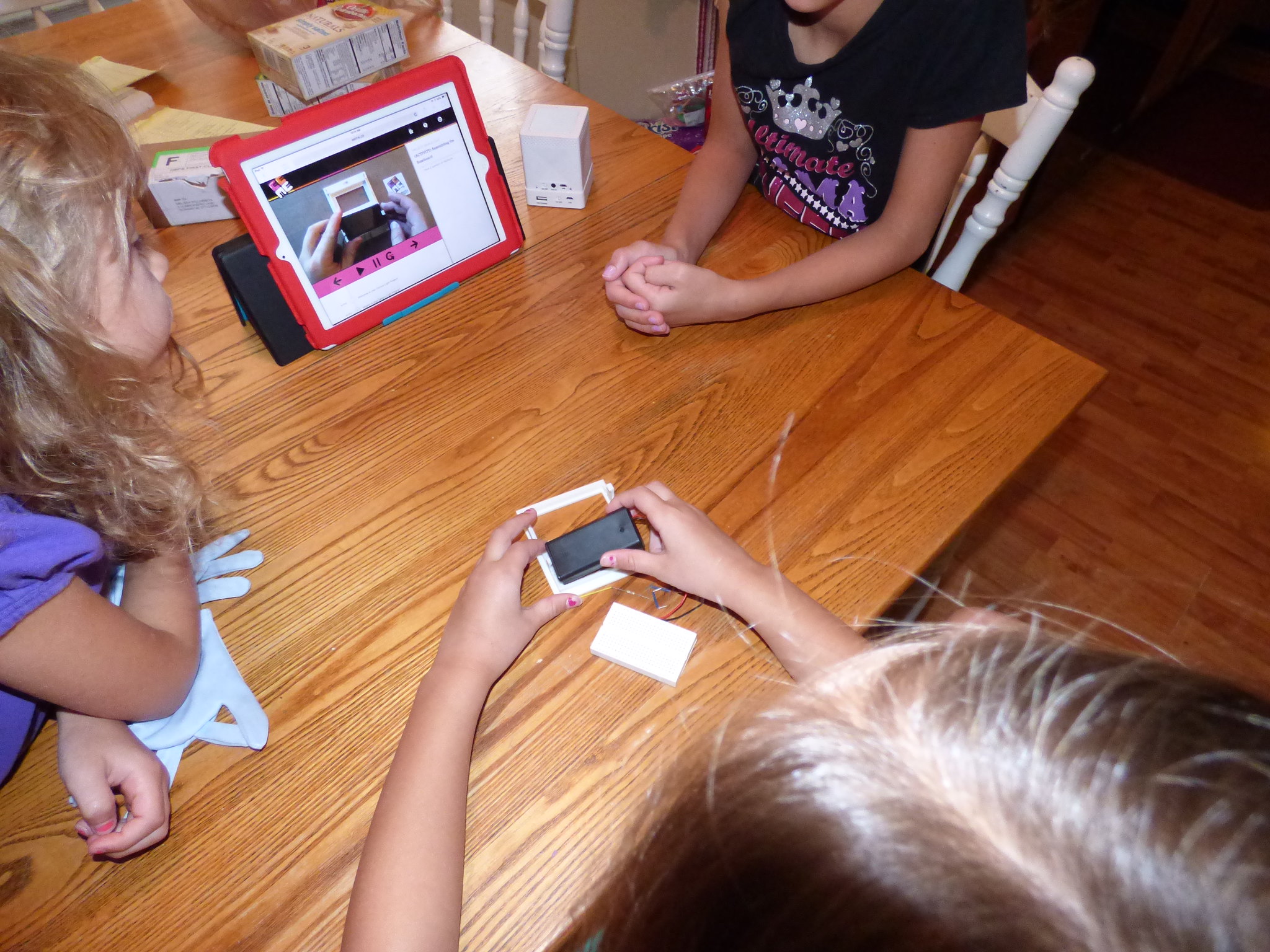
The basic project we experienced was the Genius Light. Everything was included in this basic kit which we needed to create a working LED light. All of the instructions are online and easy to access and clearly explained. This was really important to us because I have no experience with circuitry. 
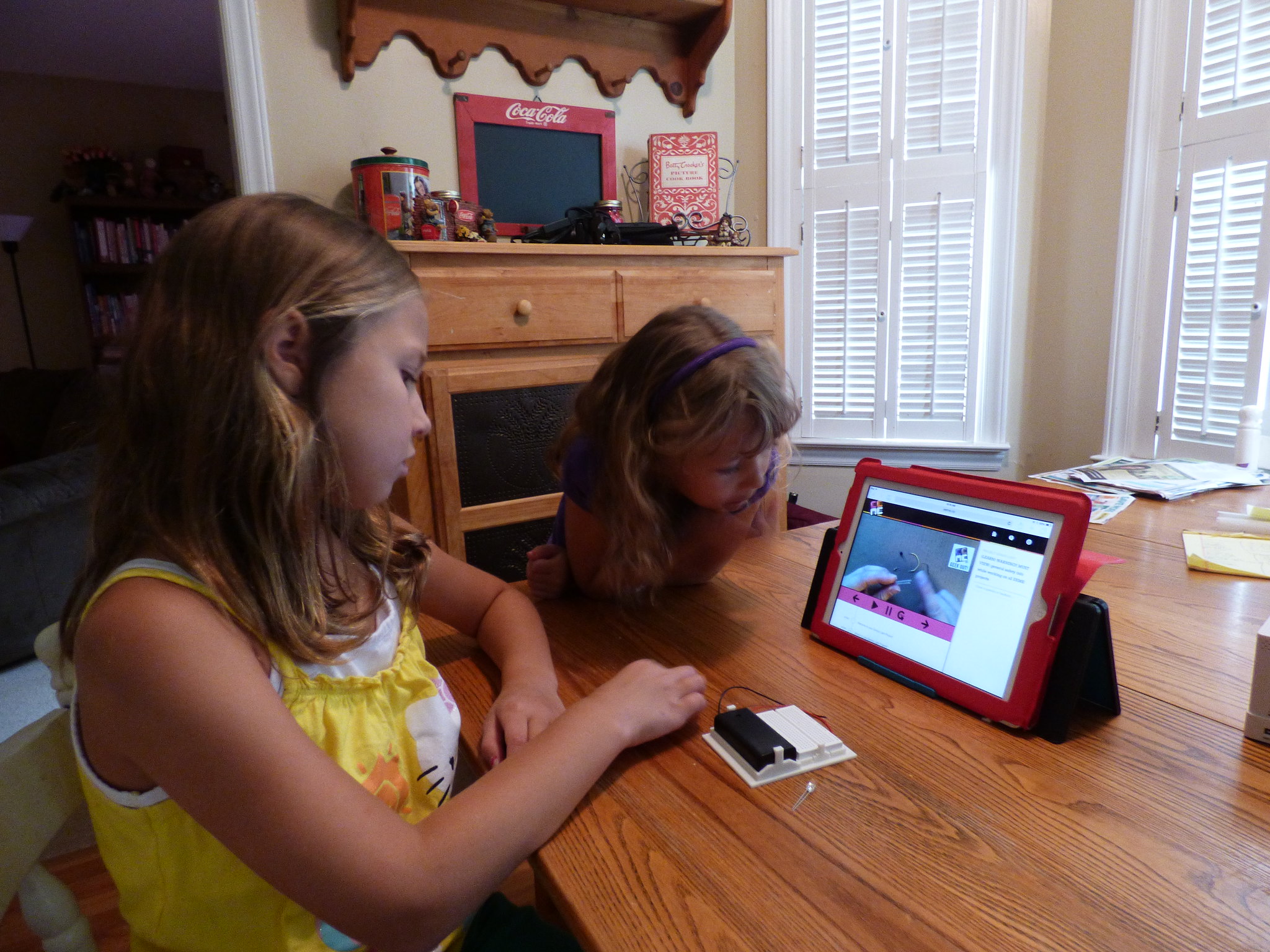
The video is taken from the same view as the project builder has which is very helpful. Beth did have trouble sometimes reversing the direction, but we would just back up a bit and she would work through it. She is 8, so on the younger end of the projects suggested range (7-12). She did great, but I think this contributed to some of the trouble with reversal. 
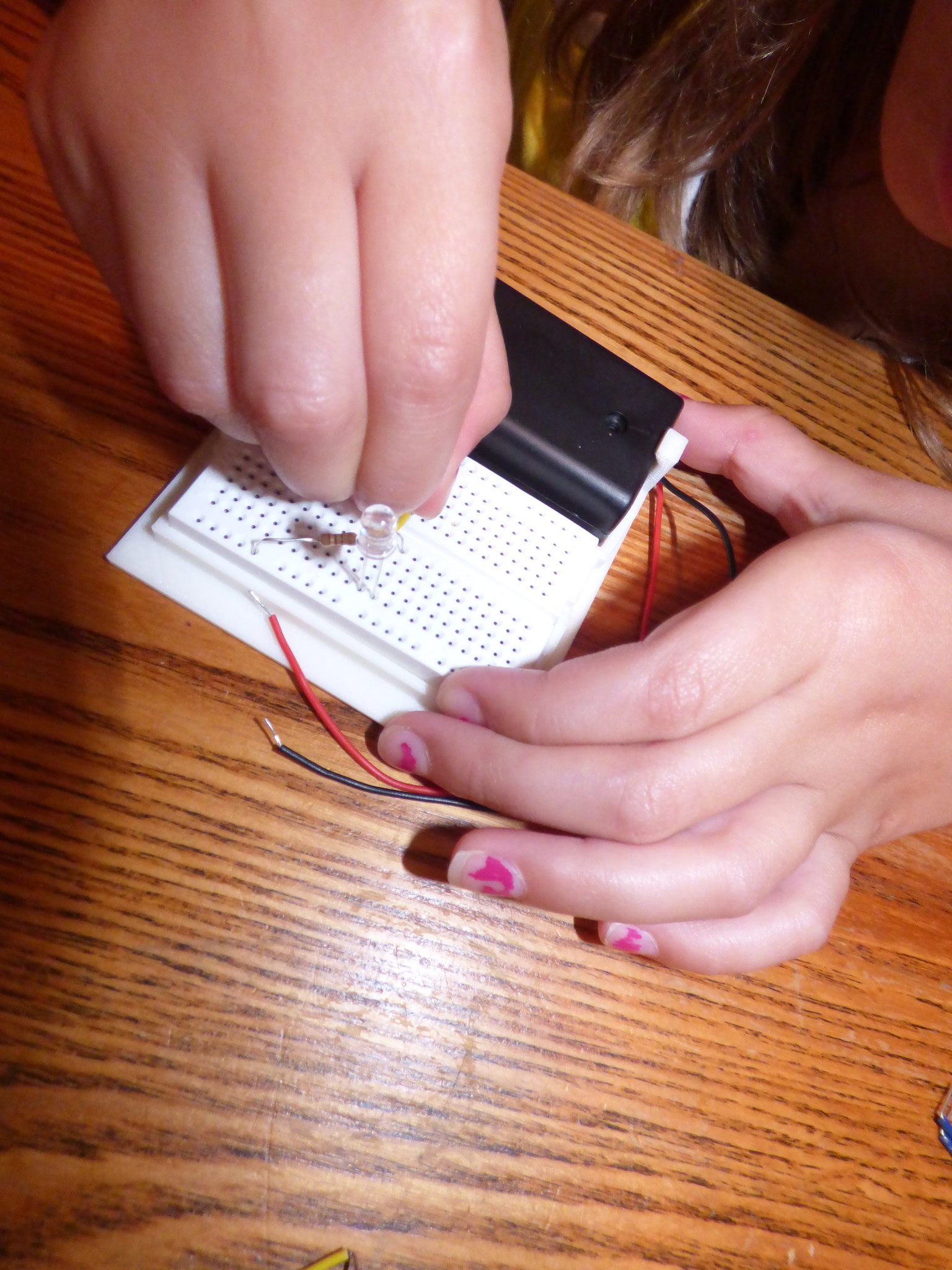
The project is small, so it was helpful to be able to pause the video whenever we wanted. However, even though the project is small, the wires are easy to insert. 
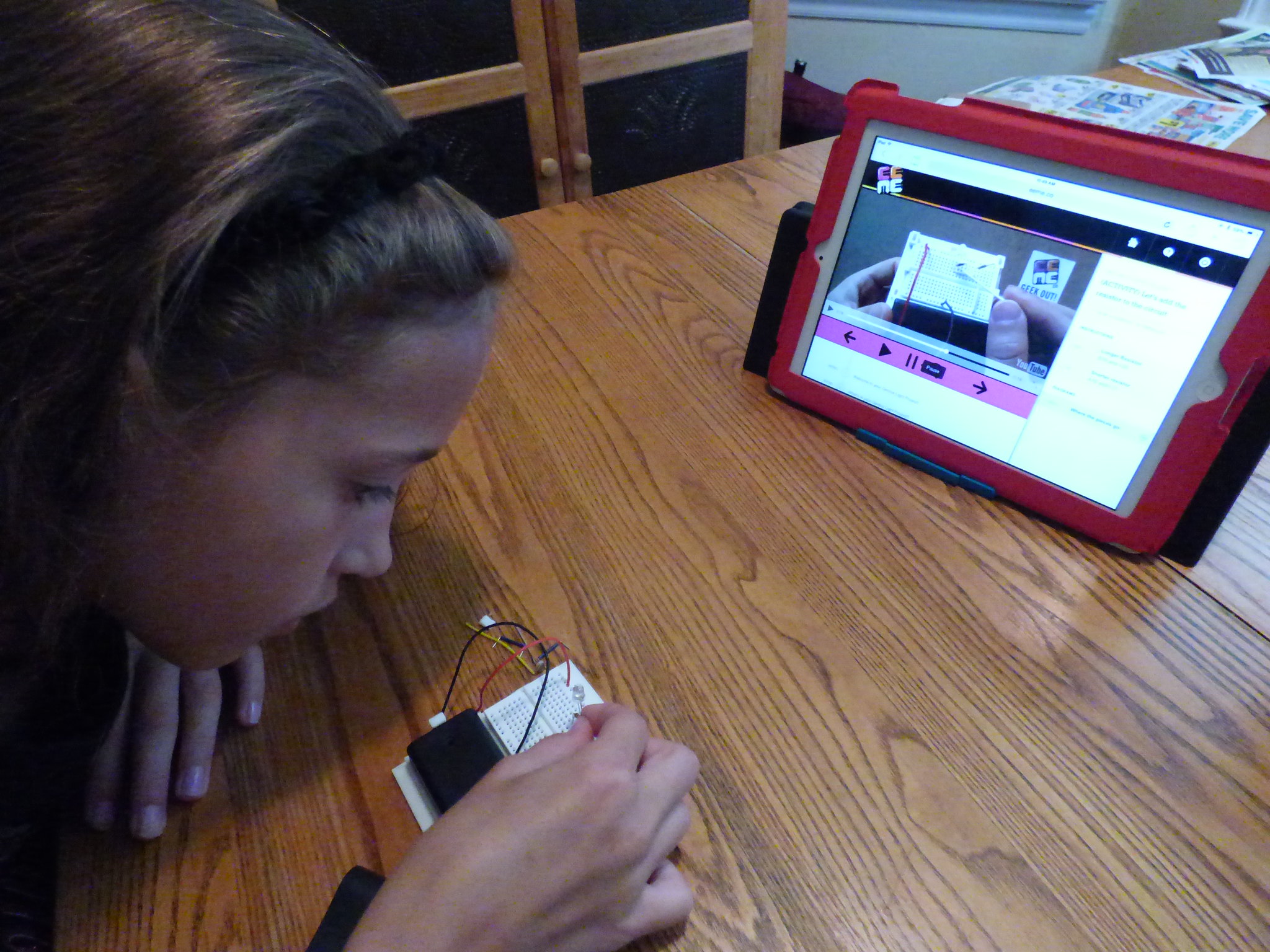
Rose took over about half-way through the project. They took turns working on this project. Rose is 10, so right in the center of the age range for the projects. She very easily followed the instructions although I had to help her keep things a little neater. Rose’s only difficulty was wanting to get ahead of the directions! 
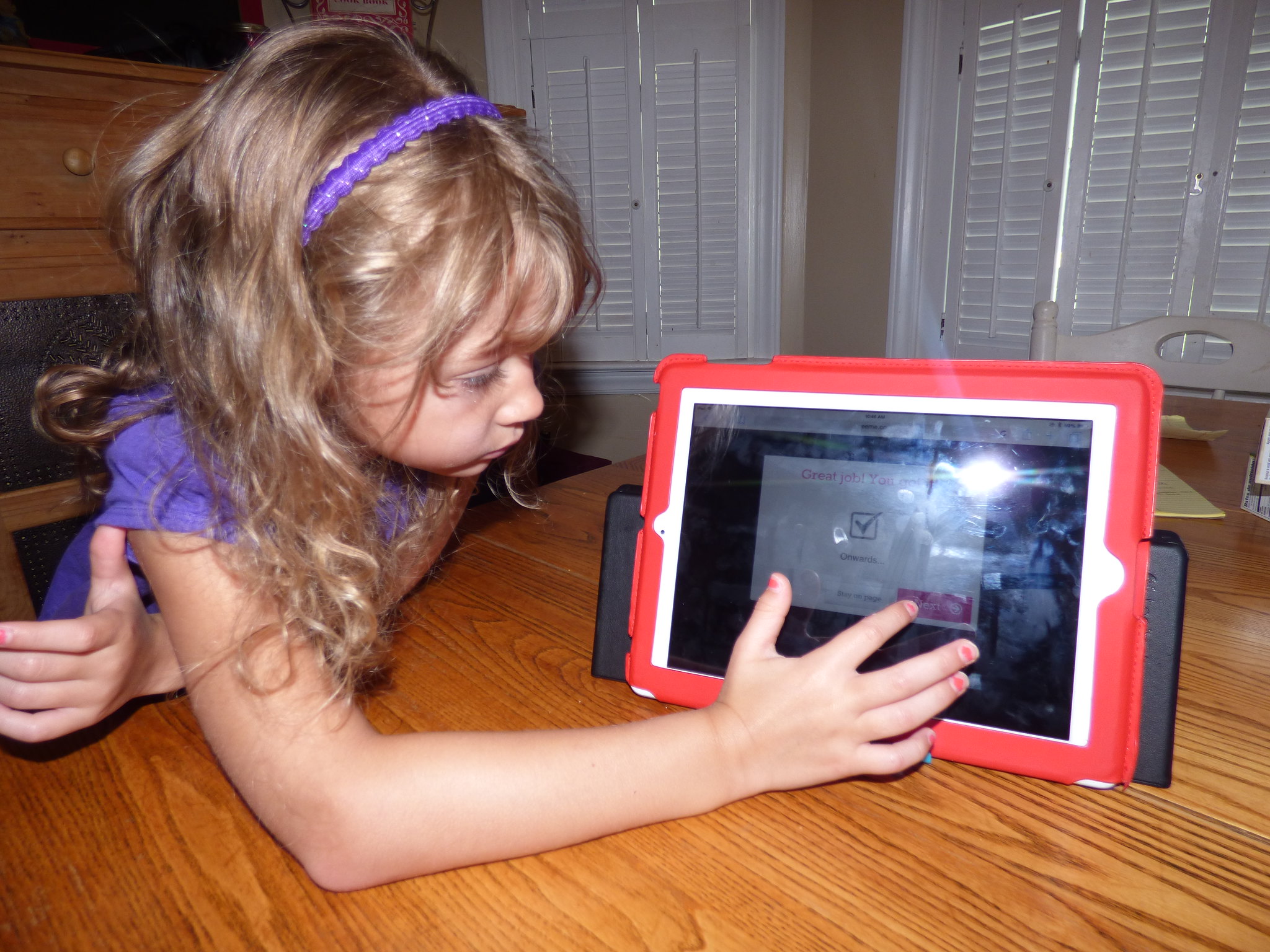
So this was what Grace did during the project! The sweet little thing wanted to be right in the middle of things, but she is only 5 and really isn’t quite ready. She did also help out by finding some of the different parts for her sisters. She did pick up on quite a few things as well which was fun to see. Pretty soon she will be building a circuit all on her own!
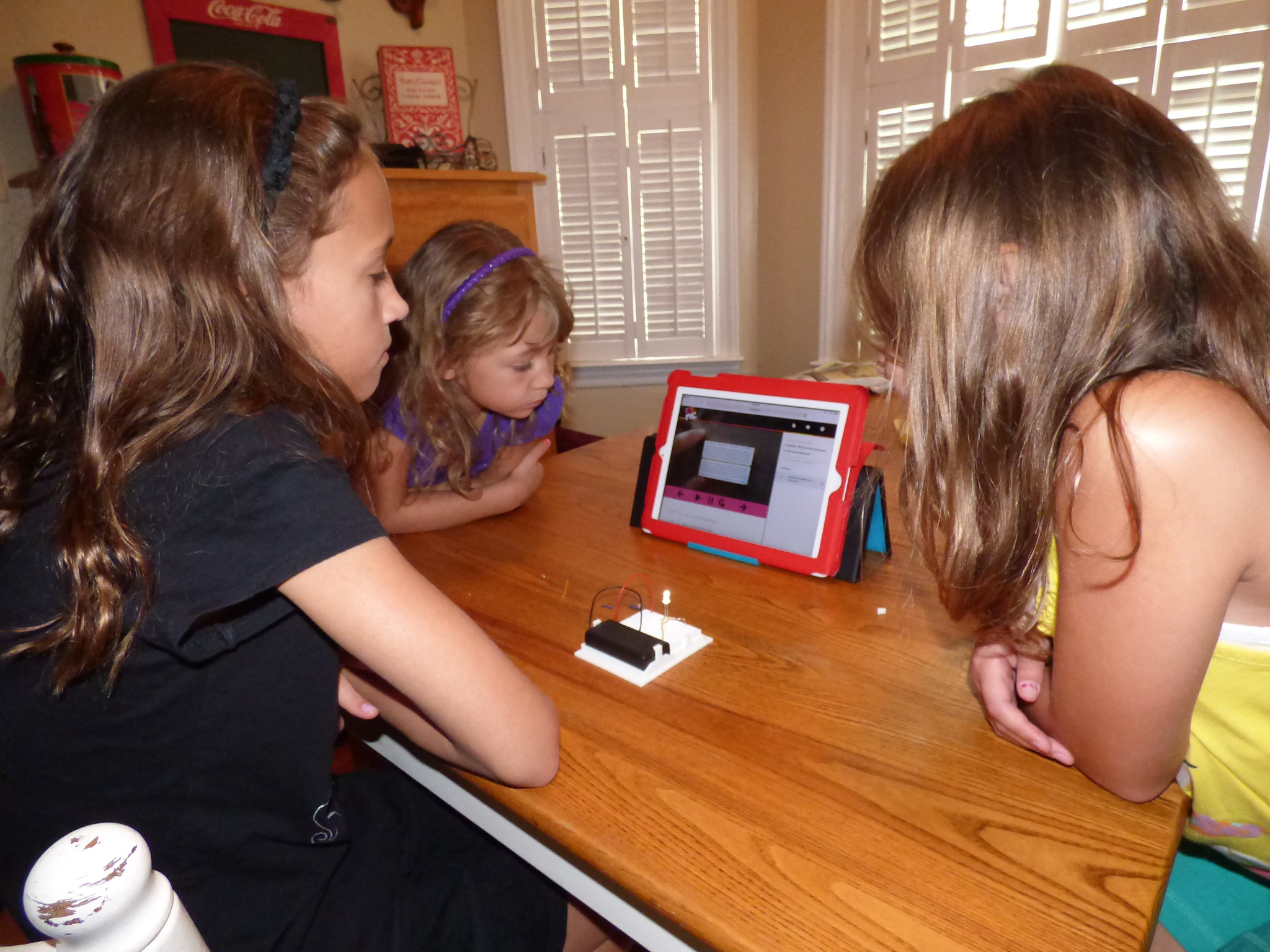
This nice big picture shows what the girls created! The LED light is shining here. They also worked at creating a dimming version and learned how motion sensor lights work. 
Sometimes homeschooling can be tedious. Other times I sit back, completely blown away by the opportunities we have for learning. Working with this EEME project was definitely one those WOW moments for me. Seeing my girls learn about circuitry in an hands-on and meaningful way was so much fun. The best part as a parent was just that. It was an opportunity for me to merely observe learning. I’m right in the trenches with them every day and sometimes I don’t get to just appreciate all which is happening in our schoolroom. Moments like these give me moment to really relish in what a blessing this educational journey really is for our family. 
Disclaimer: I received this project in exchange for an honest review. I was not required to write a positive review. These opinions are my own. 

Principles of Mathematics: A Moms of Masterbooks Review

My experience has been you love math, or you hate math. At least this is how we say it. In reality I think it is more a matter of, “I understand mathematical concepts with ease,” or “Numbers make my head hurt.” Confession: I fall into the latter category! Since I know this is true I’ve approached mathematics in our homeschool with trepedation and (with all honesty) a healthy dose of fear. What if I mess my kids up? What if they are mathematical geniuses? I have a feeling I’m not alone. I’ve met countless other homeschooling mamas who feel completely inadequate when it comes to teaching math.

It took us three tries to find a solid mathematics program which actually worked for everyone. I’m starting to feel pressure as we creep up towards middle school (my oldest will be a 5th grader next year!). Our curriculum is elementary only and I haven’t felt good about any pre-algebra program I’ve come across. So far it has all felt dry and…I don’t know…too much like math? Rose has always disliked math and I knew we needed to find something to inspire her as we move on to higher levels.


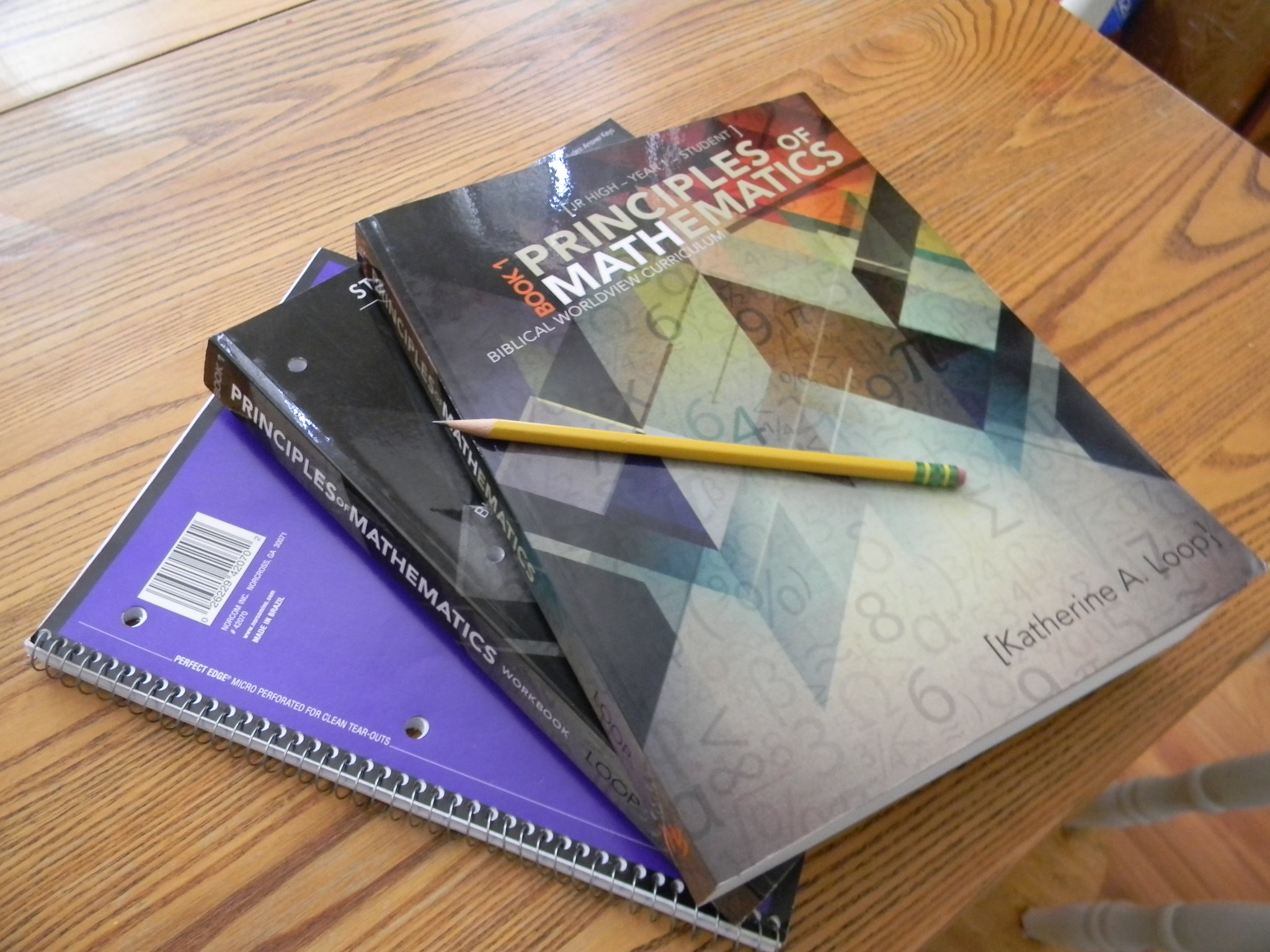
I was so intrigued when I heard Master Books was publishing a 2-year math curriculum. I love everything I get my hands on from this company because I know it is solidly written on a biblical foundation. What in the world was this math curriculum going to look like? In a word: Beautiful. Principles of Mathematics by Katherine Loop is the most beautifully written math book I have ever come across, and believe me, I’ve checked out a lot!

I am so in love with this curriculum, I’m currently working my way through it just for myself. I am determined to no longer dislike and fear math the way I have for years. So as I’m writing about this, keep in mind I’m speaking from personal experience of use.

What I love…
1. Short, concise lessons written in a conversational style
2. Short practice assignments
 (and most importantly)
3. Everything is centered around the Bible. 
You might wonder how a math curriculum can be centered around the Bible? I mean I always had the mindset that God is Creator of all, including math, but I never really saw God in the numbers. They were just there as part of creation. I now view math in such a different way just after reading the first chapter of this curriculum. 
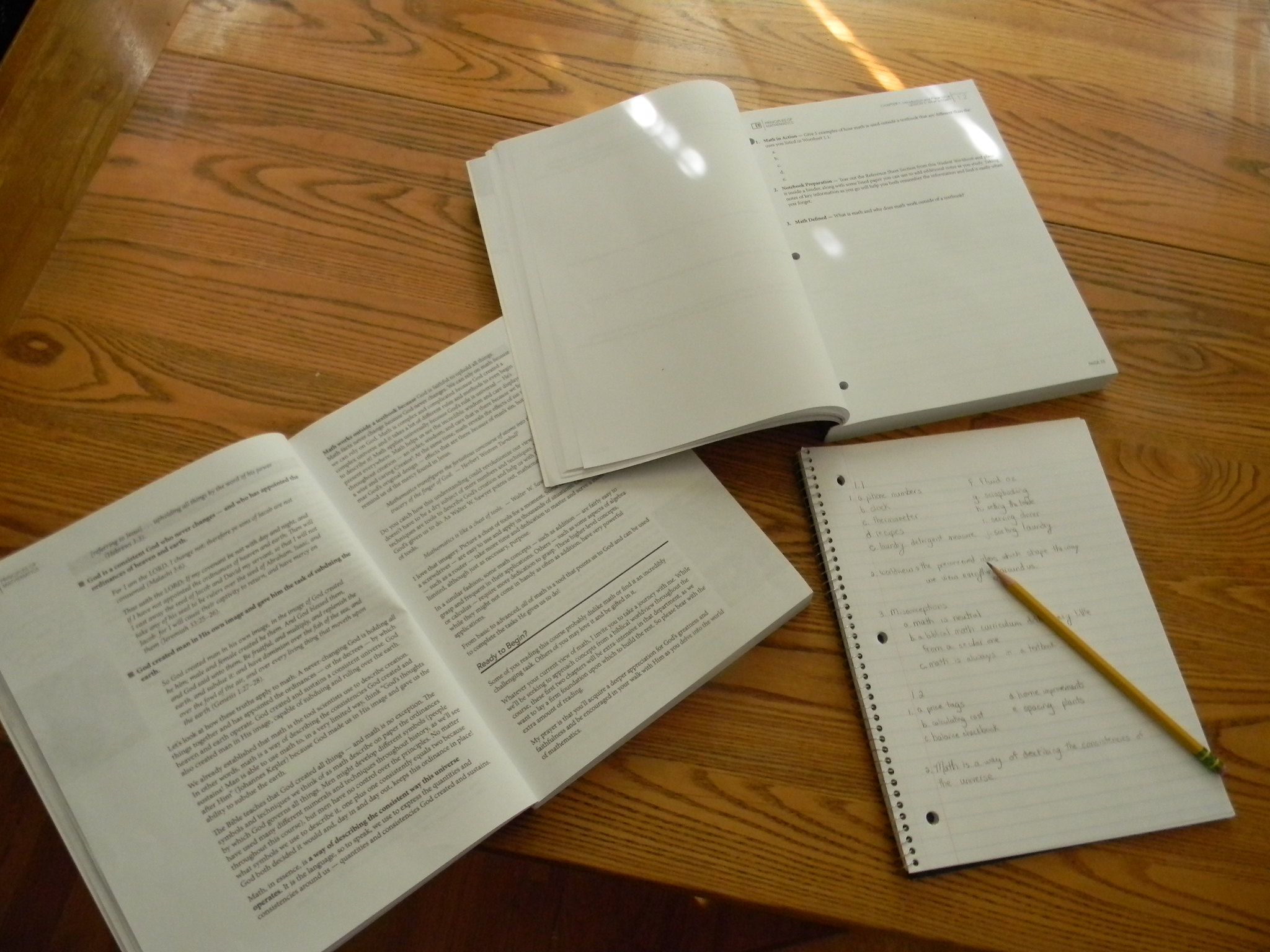
What I read when I opened this book set (a text book and a workbook) has completely transformed my perspective. Math is more than just numbers. It’s something we use everyday. It’s a way to express what we see in creation around us. It is something beautiful and as mysterious as it may seem, it is logical, certain, and steady, just like our Heavenly Father. 
Even though I am thoroughly enjoying this, I also wanted to have a field-test of sorts within the correct age group. Since my own kids are not quite ready for the level of math presented here, I recruited a friend of ours who will be in 7th grade next year. 
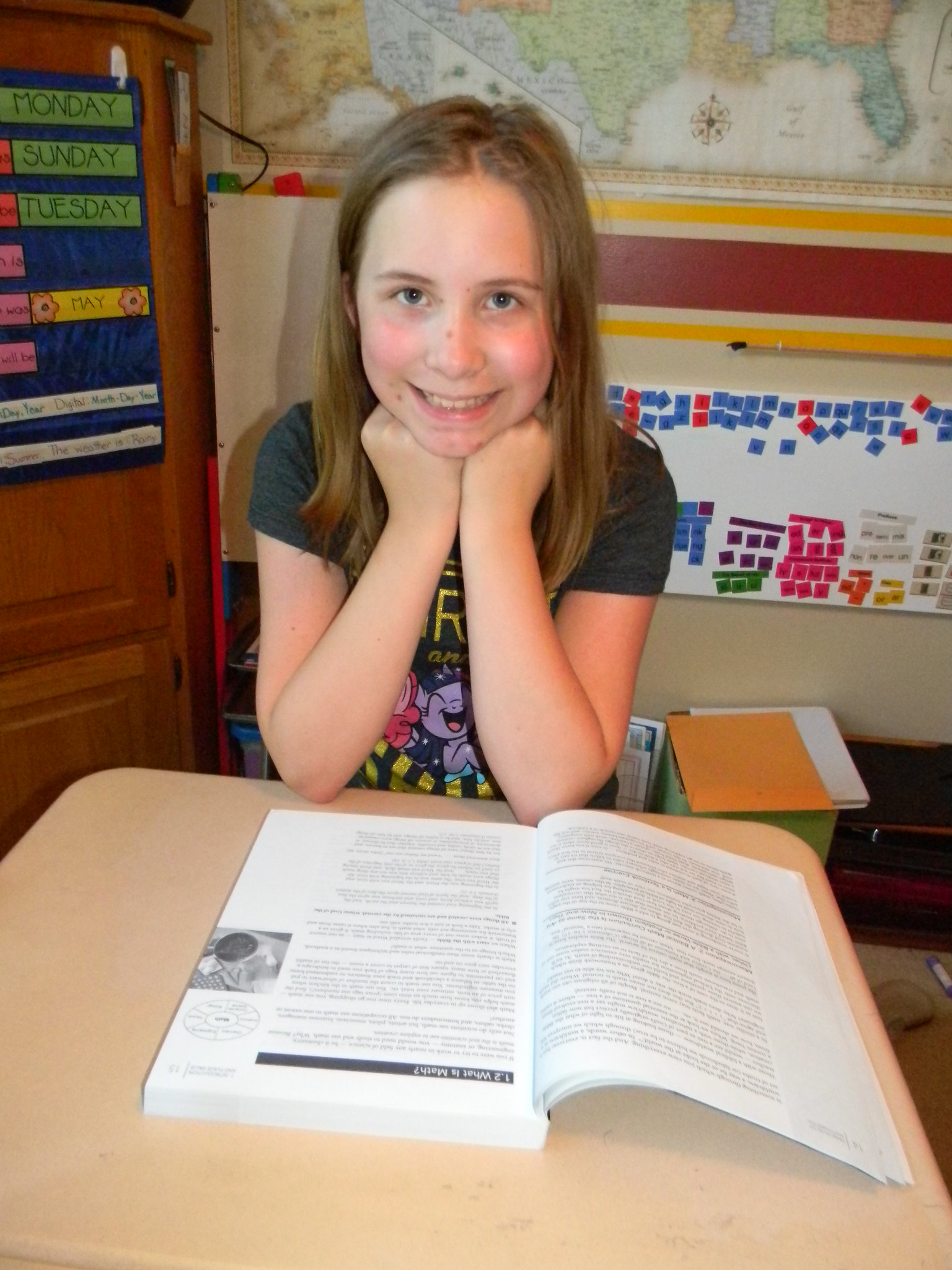
We are quite close to Faith’s family who is a part of our church and she was happy to comply and worked on the first few lessons while she was hanging out with us one day. Faith attends a traditional public school so I was anxious to hear her thoughts about this very different way to learn. She is also quite an advanced student. 
When I asked Faith her thoughts about this book she said she really liked how it was written. It isn’t your traditional way of presenting a math concept followed by multiple practice problems. She appreciated how it not only explained a concept in an easy way to follow, but also that it related it to real life in a reasonable way rather than contrived word problems. 
The other thing she said she really liked was how it expressed that math is not neutral but instead a gift from God which allows us to understand His creation. This theme runs throughout the curriculum and shown through practical examples and practice. 
This is a two-part curriculum which can be completed in a year or two years, whichever is best for the students. The second part is scheduled to be published this fall and I can’t wait! I appreciate there is both a full year and a semester schedule for finishing the book provided. This would be a good fit for pre-algebra. Some kids could do it in a year, others should take more time to process and let the ideas and concepts really sink into their minds. I’m in no hurry to push my girls through math and we’ll take things as they come. 

Disclaimer: I received this curriculum in exchange for my honest review. I was not required to write a positive review. All opinions are my own. 

IXL.com: Review

 IXL Logo photo ixllogofixed.png
What do my girls work hard for each day? Computer learning time! They know they must wait for my permission, but usually at some point during the day, unless they have lost the privilege, the girls get to play learning games on the computer. I am not a fan of a full computer-based curriculum for our studies, but I do like for them to have opportunities to learn on the computer. My girls have learned far more computer skills than I would have imagined at their age! I was eight when we got our first computer, an IBM, and I was one of the first in my grade-school class to turn in a typed assignment. Now children take computers for granted as part of learning, so I am always on the lookout for high quality programs.  
 photo 280956_362445090496975_1685320066_o_zpse8620420.jpg
IXL.com is a website dedicated to enhancing math and language arts learning for students. Their math site is for pre-K through 12th grade and language arts is for 2nd-4th grade. We were blessed to review the math portion of the site. A subscription to IXL is $9.95 for math only, $9.95 for language arts only, or $15.95 a month for both. If you purchase a yearly subscription it is $79.00 for either math or language arts, and $129.00 a year for both subjects. Each additional child is only $2 per month, or $20 per year. 
Screen time has been a hot commodity since our family acquired an iPad. Rose really loves the IXL app and I love that she is able to further master certain skills like multiplication. I love having so many options of activities for her to choose from and that I am fully aware of what they are working on. Rose’s goal was to get everything under her name checked off!
Grace also thoroughly enjoyed the app! She loved being able to sign in on her own. Each of the girls had their own unique symbol and they signed in with a password they would remember. The parent must be logged in first, but then the kids are able to access it on their own. 
A feature which is really nice, especially for preschoolers, is that each question can be read aloud. It took her a little while to figure out what some of the questions were asking, but she soon mastered many of the preschool skills. She has completed the most of any of the three girls. She has really enjoyed growing in her math skills. I appreciate that even though it is fun, it is still more traditional math practice rather than games. It checks their knowledge directly rather than using flashy pictures and cartoons which in my opinion can sometimes distract from the skill. While it is very colorful, unneeded background scenery and distracting music is blissfully absent. I never once had to ask any of the girls to turn the volume down because it was distracting to the others. 

I do hope that a language arts app is in the works. I have found that learning and play is much easier for the girls, especially Grace, on the iPad. She doesn’t waste time and get frustrated with the mouse. I’m so glad IXL has this app available so she can have a better experience.Click below to see what my Crewmates had to say!Photobucket

A+ Tutorsoft: Giveaway! (And a coupon code!!!!!)

I’m excited to have the chance to offer you the chance to win 3 months to a high-quality, computer-based online math program. Whenever someone tells me they are looking for a high-quality math program that takes the pressure off them to teach math, I point them to A+ Tutorsoft.

I found this to be very enjoyable for my daughter as well as something I could trust to be doing the job well. One reason I feel so strongly about this program is because it will reteach any area your student does not fully grasp right away. I don’t have to go searching through retrieved data to decipher where there may be trouble areas. Another reason is as you can see it isn’t strictly computer-based. The computer is the main source for instruction, but the student has practice which is completed on paper. You can click here to read my full review from last year!

I also have a coupon code to offer you which will give you a whopping 20% off!!!! This does not expire and can be used every time you order. I love coupons, especially ones that do not expire! 
GRACEFILL – use for 20% off your entire order!

a Rafflecopter giveaway

Arithmetic Village: Review

Have you ever wished math could be, well, less math-like? My husband loves the predictability of numbers and operations whereas I feel stifled when I look at a page full of numbers. For us right-brainers math can feel tedious and in need of a giant boost of something creative. I stumbled across something wonderful one day as I browsed Facebook: Arithmetic Village…math for the right-brains!

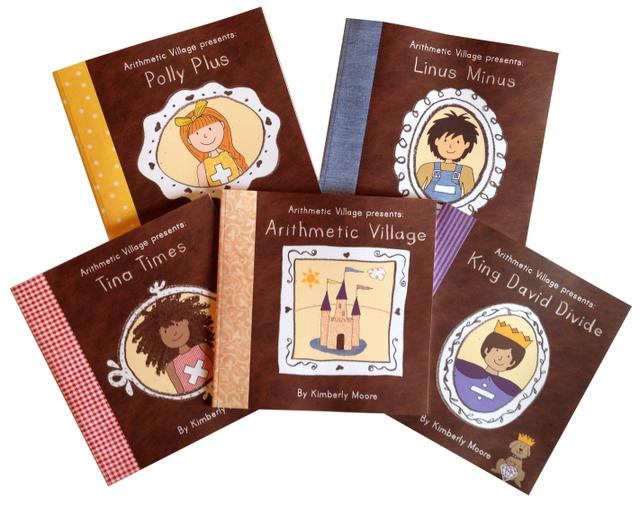
Arithmetic Village is a series of beautifully illustrated books which teach mathematical concepts in a very creative and unique way. Children learn mathematics with hands-on activities which excite and engage like no other math manipulative I have seen. While this is not a stand-alone mathematics curriculum it is a wonderful supplement to any curriculum out there and is especially perfect for the right-brained learner. The unique blend of story-telling, rhyme, role-play, and tactile learning experience makes children want to do math!

The five books in the series cover place value, addition, subtraction, multiplication, and division inviting children to actively participate in the learning rather than just be told what each operation means. In addition to being beautifully illustrated these sweet stories are told in rhyme which often creates a more memorable learning experience for children. 
Are you intrigued yet?
You can purchase hard-copies of the books or printable pdf files with directions. Be aware this will take a large amount of ink, particularly yellow, if you want them to turn out nicely. The pdf files also must be cut and bound by hand, but the payoff for this effort to make them nice is well worth it! 
My sweet husband bought me a new paper cutter for this project…and then I convinced him to cut them for me. Left-brain precision at its finest! We used card stock and a long stapler for binding. There are directions for printing here as well as how to sew the binding by hand.
First the children decorate their treasure box. Since there are three little girls in our house I opted for a larger treasure box for us all to use together. I used wedding favor bags and red vase gems from Walmart for the jewels and bags. All five books and 10 sacks of 10 gems fit neatly inside. I also have a small basket of loose gems in the box and as soon as I have a chance I’m going to add in several miniature treasure chests. The girls loved decorating the box. I used tissue paper and modge podge to give it a stained glass look and we added on the lettering with stickers we already had. 
Now that the box is done, let the fun begin!

I read the girls the first story in the set, Arithmetic Village. Then we acted out what the story told of gems falling from the sky while the villagers slept, the villagers collecting the jewels and putting 10 in each sack, and delivering sacks to the king. Grace and Beth especially liked this part. Grace is three and has been counting well for a while now. She was excited to show off her counting skills! This first book introduces the ideas and main characters who reside in Arithmetic Village and will reoccur later in the series. 
Each of the following books deal with a different ma thematic operation. We found out more about Polly Plus, Linus Minus, Tina Times, and King David Divide as we read through the series. The girls enjoyed the stories immensely and have read them several times on their own. 
Another wonderful aspect of these unique learning tools is the variety of free ideas and activities provided through the Arithmetic Village website, blog, youtube channel, facebook page, twitter page, and pinterest page. You will never run out of ideas! We used several of the printable work pages to aid in our learning endeavor. Here Beth is practicing place value by using the rules learned in Arithmetic Village and the printable worksheet available on the website. 

Rose and Beth took turns helping Grace learn to add and subtract. It was so much fun seeing Grace begin to understand the concepts of addition and subtraction at 3 years old. I wish I’d had this resource when my older girls were just starting out with mathematics instruction! 
Our family has been greatly blessed by this wonderful resource and I know yours will be too. Math manipulatives are known for helping understand concepts, but I have yet to see one which engages my girls as much as Arithmetic Village has. How do I know they love it? I’ve been asked, “Mommy, can we play with the treasure chest and gems again? Where are the books?” almost daily. I think this resource should be in every homeschool and classroom and will greatly benefit every child whether they are right-brained or left-brained! 
Have you used Arithmetic Village? What is your favorite part of this resource? 

Disclaimer
I received the Arithmetic Village series in pdf form in exchange for my honest review. I was not required to write a positive review. No other compensation was received.

Math Mammoth’s Blue Series: Review

 photo logo_zps1488a12d.jpg
During my first official year of homeschooling for 1st grade I had curriculum overload. If you’ve never experienced this it is the inevitable phenomenon newbies face when their homeschool research begins. I have been told this usually occurs at the beginning either by way of the internet or a homeschool convention. Our journey began rather abruptly and I honestly didn’t have much time to research. I jumped in with both feet with only a few weeks notice and went with what our core curriculum suggested for math. This was fine until mid-year when it became clear our original math curriculum was not working. During my hours of research I found oodles of recommendations for Math Mammoth. Although this wasn’t the new curriculum I eventually chose I have always had it in the back of my mind, especially the Blue Series 

 photo lighblue_zps2ba8ce5b.jpg

There are two ways you can purchase Math Mammoth. You can go the traditional grade-level route with the Light Blue Series. Topics are covered in a mastery format with only a few topics per grade. Conceptual thinking is encouraged and mental math and number sense are encouraged. This complete curriculum covers grades 1-6

 photo blueseries_zpsb625de99.jpg

I was looking for something to act more as a supplement since the mental math and conceptual approach did not work so well for us the first time around with the original curriculum. The Blue Series has separate topics you can purchase and complete as you wish. These are intended to be used as supplement, remediation, or review. Since I am happy with our current curriculum I appreciate that this program has different options depending on your needs.

These are the four units we reviewed…

U.S. Money

I used this with both Rose and Beth. This is the first time I’ve taught them the same subject at the same time and they seemed to enjoy it. I wouldn’t want to do it on a regular basis because I want each of my girls to move at their own pace without feeling pressured. Beth took a little longer to finish her independent work because she is a slower writer, but both girls worked fabulously through the portion of money which we covered.

I like the flexibility and encouragement to  use real coins. While printed pictures are fine, using real money give practical, real-life application. Since the girls wanted something to remain in the box on the page we did coin rubbings as they practiced making the correct change. You can also study money from different countries including Canadian, European, British, and Australian. 
I really liked this unit for learning more about money. It was a nice change from what we normally do and gave the girls different types of practice counting money. While there wasn’t anything incredibly new or different to me in the approaches used to teach the concepts, they were simple and easy to impart to the girls.
Clock

Beth worked with the clock unit on her own since Rose has basically mastered telling time. I really liked the combination of drawing on clocks and writing time. The combination of the two seemed to cement some time concepts we have been working on this year, but didn’t quite settle in. I love the ability to pace this unit alongside our current curriculum to give her a more solid footing in this area. 
Measurement 1

This unit was one both girls worked on together as well. While we have covered length and lightly touched on measurement, we have not formally covered measurements with our curriculum yet. A topical study was a nice place to start. 
Rather than jump right into types of measuring the unit begins by having the kids measure anything they choose with two different size shoes. Although this was an interesting start to the unit, I disliked the method. I would have preferred this concept be taught later, after the idea of concrete units of measure had been covered. The girls did enjoy the measuring activity though! 
Multiplication 1


Rose has been pestering me for a few months to start learning multiplication. I told her the basic idea, but didn’t want to formally cover this area until I felt she had a firm grasp on higher addition. She was over-the-moon excited when I told her we would be starting multiplication before she reached it in our curriculum. 
Although I didn’t care for the conceptual start for measurement, I did like it for the beginning steps to learn multiplication. Understanding what multiplication means seems the most logical place to start. Although I think Rose already understood these concepts seeing her formally work through it on paper gave me assurance she knew what she was doing. She is so excited to work through this unit that she often asks to work further after our official school-time is over. 

Teacher’s editions of math books are typically needed and sometimes I’ve wished there was a manual for the teacher’s book! This is not needed with Math Mammoth. There were several times when I really felt I could have let my girls learn many of these concepts on their own. This is a very user-friendly curriculum for both teacher and student.

To read more reviews about Math Mammoth including the other curricula offered click below! 

Photobucket
 photo DisclaimerGraphic1_zpsf612f371.gif


Math Rider: Review

 photo mathriderlogo_zps7d664106.jpg

When I was in school math wasn’t my best subject. I always just felt like I just wasn’t very good at it even though I didn’t know exactly why. Looking back on it, I wonder if perhaps it was a lack of math fact mastery. I recently found out our state is attempting to pass a law that requires students to master addition, subtraction, multiplication, and division math facts. Now, I have no idea why this isn’t already required, but if this was the case when I was in grade school it would make sense that math would be more difficult if I never mastered the facts initially.

 photo mathrider-product-box-v5-200x209_zpsf141caec.jpg

Math Rider is far and away the best program I have seen for math fact retention. It is fun, it is quick, and it works! I honestly feel the $47 is well worth the price. I have been recommending this to everyone who tells me their children are struggling with math facts. This single program covers multiple levels which can be adjusted to individual users as well as all four math operations (addition, subtraction, multiplication, division).  Math Rider is intended for ages 6-12 (2nd-6th grade) but it is a good program for any age who has good basic understanding of addition concepts.

The game is set up so students can practice their facts in practice runs. When practicing the facts they may speed up or slow down as they need to according to their ability. I love that the game automatically adjusts to their speed. It also is not one bit discouraging when they miss a fact. Students have a certain amount of time to find the correct answer before the entire fact is simply read aloud. The same fact is then quickly introduced again so they can have an opportunity to answer correctly thus quickly building mastery. Students can also complete quests. These quests give them a goal to get medicine, find things, help the princess, and return objects to their lost land. The graphics and music are engaging and keep kids interested.

 One of the best features allows me to see what facts my girls have mastered, almost have mastered, and don’t know at all. The chart is easy to read and the students’ biggest challenges are listed to the side. A sliding bar shows mastery level at a quick glance and another chart shows how much improvement has been made. This is available for each operation studied. I couldn’t think of anything else I would add to this and ti has proved extremely helpful for me as their teacher.

I used this with Rose (7) and Beth (5). Rose felt like she struggled with math. In reality, she understands the concepts, but recalling math facts quickly has been a frustration for her. When she did speed drills as part of her study she would get the answers correct, but not be able to finish them all in the amount of time allotted. I see the value of speed drills, but encouraged her that even if it took her longer to recall a fact the important thing was that she knew it. Even so she still felt frustration at not being able to finish her speed drills.

After just a few week of using Math Rider Rose consistently finishes her math fact drills early. That’s right! She moved from consistently having 4-5 out of 20 not done in the 60 second time limit to getting them all done correctly with 5-10 seconds left. I can’t tell you what this has done for her confidence.

Beth is only in Kindergarten, but she excels in math and has moved on to the 1st grade curriculum including starting working math facts. I didn’t have to actually teach the concept of addition. She just knew it (I assume from listening in on her older sister’s lessons).

Moving forward into adding three numbers was a breeze due in no small part to Math Rider. I never taught her this concept either (gasp!). She started working on her lessons while I was finishing up the morning chores. The next thing I knew she was adding three numbers without any explanation needed.

Math rider has blessed both my girl immensely. The game was created by a family who was looking for help with their own kids. They did a great job! I intended for them to use it a few times a week, but this has turned into a daily activity, because they beg to play it! They frequently ask to play this game when it isn’t even school time. Are you kidding? Math for fun? Now you know why I can’t say enough good things!

Don’t forget to check out the other reviews from my Crewmates!

Photobucket

 photo DisclaimerGraphic1_zpsf612f371.gif

Touch Math: Preschool Review

logo photo touchlogo_zps5760f524.jpg

Grace is my youngest. She has only ever known home-learning. Even though my oldest had a year at kindergarten, her other sister was learning to read that year. There was no transition for Grace because it was simply normal. Maybe it’s because she’s the third or maybe it’s just personality, but I cannot seem to give this little girl enough learning to satisfy her! She has her own curriculum and daily work, just like her sisters, but it is never enough.

PreK photo 429809_10151403646419867_522359968_n_zps28782958.jpg

I was beyond ecstatic to review Touch Math’s Pre-K program with Grace. For $59.95 even the youngest learners are able to learn basic math. The printable pdf files are engaging, but not distracting with unnecessary graphics or colors which I often feel take away from the concepts. However, the manipulatives used with this program are brightly colored and engaging in a way that causes the child to want to use them!

Grace could not wait to get her hands on them! We received our package on a Friday afternoon. One glimpse of the beautiful numbers and number cards cause a period of jumping and cheering from my three-y-ear-old. The Texture Cards and 3D Numerals (Sold separately) kept her entertained by themselves for almost an hour with her Grandma the next day. She touched each number, practiced tracing them, counted whatever object or character was on the card, and overall simply enjoyed these thoroughly. The 3D Numerals were a great way to introduce each number. I was surprised to find out she already recognizes her numbers consistently and we had fun using these to identify numbers of objects on the worksheets as well as around the room. Included in the numeral box are pdf files on CD with activities and ideas for teaching. These manipulatives are intended to be used for more than one level.

Touch Math also sent us a set of Touch Shapes. These transparent, colorful shapes are so much fun! The multiple colors, shapes, and sizes provide varied levels of learning opportunities including sorting, size arrangement, and shape & color recognition.

Grace jumped right into these without hesitation! After I printed the worksheets I opted to slip them into protective covers which could be written on with dry-erase markers. This way I could reuse the lessons with her and save paper. Not to mention that she will jump at any opportunity to use markers!

In just a couple of days Grace understood the concept of equal. I hadn’t considered teaching her this since I had only seen the concept in Kindergarten level materials. Touch Math gives scripted lessons which really helps me out. Sometimes I have a hard time finding the words to say to teach a new concept to my young girls. When a curriculum gives me step-by-step directions, the guess work is gone. I may have to re-explain something, but it is much easier to have a starting point.

I really liked how the worksheets incorporated both written work and manipulatives. I like math programs which give both a hands-on and traditional writing approach. We used the 3D numerals and Touch Shapes the most. Grace loved everything about this and asks daily to do her math. We typically use 3-4 worksheets a day so we’re going to get through the program quickly. I have already reviewed some of the earlier pages and she loves doing them a second just as much!

I highly recommend this program for preschool math. It is not the cheapest one available, but it isn’t outrageously priced and it is far and above the best I have seen for math at this age. The manipulatives are colorful, but not distracting. The pages are simple and not overwhelming with the amount of work. The concepts are challenging for this level and preparing the children for more complex math ideas. You won’t be disappointed with this engaging preschool curriculum!

Don’t forget to check out the other reviews from my Crewmates!

Photobucket

Disclaimer
I received a free copy of this product through the Schoolhouse Review Crew in exchange for my honest review. I was not required to write a positive review. No other compensation was received. 

A+ Tutorsoft Review

Photobucket
Math is not my favorite subject to teach. I didn’t mind math in school…until I hit my sophomore year of high school and Algebra 2. Math wasn’t the easiest subject for me, but I understood the concepts up until that class. I quickly lost confidence in my ability to do math and that hasn’t really ever gone away.
PhotobucketI anticipated reviewing A+ Interactive MATH from A+ Tutosoft, Inc with mixed feelings. While the idea of giving over the actual teaching portion of math sounded appealing, I’m typically not someone who uses computer-based teaching. I was impressed with the concepts covered for first grade and decided to look forward to this opportunity with an open mind. Beth is in Kindergarten, but completed her kindergarten math by the end of October and was more than ready for something to challenge her thinking. The program costs between $99 and $124.99 depending on whether you want to be able to have parental track and reporting (feature available for up to 5 students). It also offers levels 1st-6th grade as well as Pre-Algebra and Algebra and is available in an online version in addition to the CD format I received. 
My husband helped me install the program the day after we received it in the mail. It was easy to setup and easy to get her started. I simply needed to print the corresponding worksheets for each lesson. I also had the option to print the answer key, but decided just to use the answer key on the computer to save paper. The pages are colorful, but not overly distracting with lots of unnecessary illustrations. I appreciated this fact since Beth tends to get distracted with wanting to tell stories about the pictures! 
My sweet little girl was over-the-moon excited to use the computer for one of her subjects! The girls typically only get to use the computer as a reward after school-work is completed. She was also excited to be the only one of her sisters to get to use it. 
Beth used headphones most of the time since we school all together each morning. It was very easy for her to use the mouse and to know where to click to move the program forward. She did not want to repeat after the lady who was teaching the lesson, but after some coaxing I convinced her she would learn her math more easily if she followed the directions completely. She seemed to feel a little self-conscious about this until I told her she could whisper. After that she didn’t mind so much.

Both Beth and I really liked the virtual quiz given at the end of each lesson. She loved when the little frog would ribbit as she pushed the submit button for her answer. The first time this happened she giggled and said, “Mommy! The froggy says, ‘Ribbit,’ when I get it right!” Nothing makes my heart smile more than hearing my girls enjoy learning! I really liked this portion because if she missed something the program immediately reviewed the concept and then gave her another chance to answer immediately. The only issues we had with this was the frog wasn’t always present and she was sometimes confused what to do when he wasn’t there. 

Next came the worksheet portion of the lesson. My sweet girl can get overwhelmed when she thinks she has to do a lot of work, so when I handed her multiple pages she gave me a rather panicked look. I quickly explained there were only a few problems on each page and then she was fine. In fact, when she finished the day’s work she would typically ask to do another lesson! There were a couple of times I had to explain a concept, like how to group tens, one more time, but overall she did great on her own letting me know this program was doing it’s job! 

At the end of every unit is a test which looks very much like the daily worksheets. I wasn’t certain how Beth would do for several reasons. Because she is only in kindergarten she had not yet taken a formal test. In addition it was 9 pages long and contained 40 problems…many more than she had ever had to do at once. To my pleasant surprise she took this in stride and just handed me page after page as she finished. She was getting over a cold as well, but this didn’t stop her! Out of all the problems she only missed 3, which I was very pleased with. 

The one downside is I missed being the one to teach her this particular subject. Although I could check her work I did miss being directly involved in the learning process. However, this is a program I would like to revisit as my girls move forward into more difficult math concepts I may not feel as confident teaching. 
Overall I feel A+ Tutosoft, Inc math program is an excellent program for any family looking for a computer-based math curriculum. It is thorough, builds skills logically, and reviews concepts for the students when they don’t quite get something. I also liked that I could track my daughter’s progress and review any missed problems from the program in addition to her worksheets and tests.
A+ Tutorsoft, Inc has generously offered Review Crew readers a coupon for 50% off! If you are looking for a computer-based math program this is an excellent opportunity! 
Use SPOFFER50 at checkout for 50% off until the end of March.
Don’t forget to check out other reviews by the TOS Review Crew!

Photobucket


Disclaimer
I received a free copy of this product through the Schoolhouse Review Crew in exchange for my honest review. I was not required to write a positive review. No other compensation was received. 

Cookie Sheet Challenge Volume 2: Review and Giveaway!

Having three young girls to teach every day means I have had to train them all from day one to be somewhat independent because I have to work with each of my girls independently. This is not too difficult for Rose (2nd grade) and Beth (kindergartner) but Grace (Pre-K3) is entirely different. She’s in the beginning stages of this training.
You might wonder how this works with one so young. First of all, she sits right beside me while I teach her sisters, but the activities I give her require minimal participation on my part except for showing her how to do the activity. When she was two we used the idea of busy bags, although they weren’t in bags! Now that she has progressed academically far beyond what I expected for her age I’ve had to get a little more creative. Having challenging hands-on-manipulatives are a key element to this training.  
I love the activities made by Julie from Make, Take, & Teach, especially the Cookie Sheet Challenges! The entire Cookie Sheet Challenge series focuses on early literacy and mathematical concepts. I am thrilled to be able to review two of these sets over the next two weeks and giveaway a copy of each to one blessed reader! 
Grace surprised me one day a few months back when she showed me she recognized numbers all the way up to 20! I was expecting to be teaching her this skill, not having her show me she already knew it. Then she proceeded to look at the number and use counters to match the number. What do you do with a three-year-old, or any age, who has already mastered these skills but is still too young to move into other areas of math? Julie has created a wonderful, hands-on manipulative which is challenging my little smarty pants while not delving into some of the more complex areas of math! Cookie Sheet Challenge Volume 2 focuses on number order, recognition, and other early math concepts. 
All you need is provided in the downloadable pdf file available at the Make Take Teach, Teachers Pay Teacher’s store for $5.25. You provide the paper, a printer, magnets, and cookie sheet large enough to place a piece of standard letter sized paper. Full instructions for creating these manipulatives are also included. Rather than gluing magnets to printed numbers, I opted to purchase two packages of magnetic number sets from our local dollar store. I also like using photo paper rather than card stock. The pages last longer and gives a laminated feel without the expense of lamination. 
Grace couldn’t wait to get her hands on these. I had everything sitting in the schoolroom the night before I planned for her to start using them and she begged me to get them out! There are many activities included. The first pages she worked on were number recognition. I like that the words are written under the printed number so she can begin to associate them together. Several pages like this are included in the set with numbers missing so eventually the student is putting in all the numbers!
Another activity that Grace really enjoyed was using counters. Students are intended to find the matching number word for the digit, but since Grace isn’t there yet I just had her match the numbers and count using her star counters. She loved this and counted so well! This is her finished cookie sheet. She’s very proud of herself! 

There are many other activities included to help students learn to count all the way to 100 as well as remembering what numbers come before and after one another. These can be used in so many ways for several different ability levels.

I was snapping pictures while she worked, but except for changing the pages and a simple explanation Grace worked completely on her own. This is an excellent example of how I train them to work on their own. I used to just try to get Grace to play on her own in another room, but that failed miserably! She of course wanted to be with everyone else and like many younger siblings wanted to do school like her big sisters! Manipluatives like these from Make Take Teach have been the answer for how to meet her needs.
Now for one of you to get to win this set! Yay!!!!
(And check back next Monday for another Cookie Sheet Challenge giveaway!!!!)

a Rafflecopter giveaway

Disclaimer
I received Cookie Sheet Challenge 2 in exchange for my honest review. I was not required to write a positive review. No other compensation was received