Almanzo Wilder: Life Before Laura from Legacy Documentaries: Review

 photo legacydocumentaries_zps0971e3df.jpg
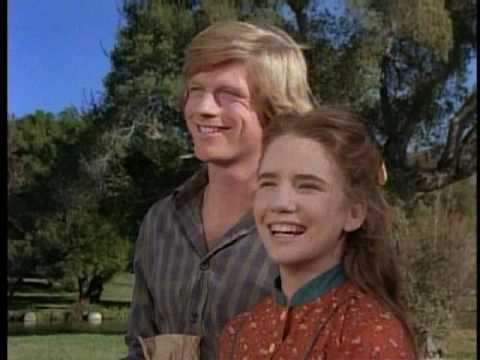
Did you grow up watching Little House on the Prarie? The series ended when I was only 3, but I remember well watching reruns. My absolute favorite episode was when Almanzo started driving Laura to her first teaching job. Although Laura had pined for Almazon since she first laid eyes on him, this was the first time when he showed interest in her. Watching the television series instilled in me a desire to read the novels. Although I never completed the entire series, I thoroughly enjoyed the stories of a simpler time and the closeness of family. 
 photo almanzowilderlifebeforelaura_zps15bde20c.jpg
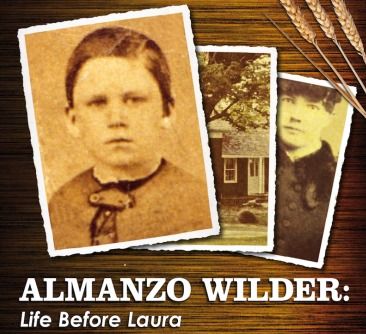
One of the books I have yet to read is Farmer Boy. The documentary Almanzo Wilder: Life Before Laura from Legacy Documentaries takes the viewer through the journey of Almanzo’s life. This beautiful documentary, narrated by Dean Butler who played Almanzo on the well-known series, is $21.95 and well worth the cost. While this will very much appeal to those who read the Little House series (typically 8-13 year-olds) the entire family can enjoy this documentary. 

There were many aspects which I liked about this DVD. One was being able to take a first-hand look at the Wilder Homestead where Almanzo grew up. Since this is located in New York we cannot take a day trip there, so this is the next best thing! We thoroughly enjoy exploring historical sites on our vacations and this is one I hope we get to visit one day. I didn’t even know it existed until I watched the documentary. 
Something else I liked was the inclusion of passages from Farmer Boy as well as illustrations from the novel. The connections between the literature as well as the actual homestead showed the real-life setting in a lovely way. Historical actors portrayed various individuals within the Wilder family as a narrator read from poignant moments in the novel bringing new life to the beloved story. 
There are two chapters on the DVD and the second was just as enjoyable as the first. It explores in more detail the Wilder Homestead which you can visit. Various rooms are showcased as well as various events available throughout the year at the Homestead. This has made me not only want to take a trip to Malone, NY, but also the other Laura Ingalls Wilder historical sites around the country.
 photo legacyoflauraingallswilder_zpsafffba0c.jpgI’m a documentary nerd. I absolutely love a good documentary showing me history as well as telling me about it. The one thing I miss about not having cable in our home is the History Channel. This was a lot of fun to review because it has been a while since I’ve seen a well-done, interesting-to-me documentary. I highly recommend this for the entire family as well as Little House on the Prairie: Legacy of Laura Ingalls Wilder also produced by Legacy Documentaries, especially if you are planning a unit using the series. 

Check out more reviews of these two documentaries from my Crewmates!
Photobucket
 photo DisclaimerGraphic1_zpsf612f371.gif

Global Art from Gryphon House: Review

 photo gr_zps4f060fb6.jpg
There is nothing more fun for my girls than an art project. I’ve admitted it before…art isn’t my favorite area of teaching. I like the outcome, but the effort to get everything going and be a frustrating point for me. The best art projects are ones I can use with all three girls at the same time, use your average art materials I already have on hand, and most importantly connect to their learning. I have found all three to hold true for Global Art from Gryphon House
 photo GH_18827_zps7156a47e.jpg

Global art is intended to use with elementary age students (k-5) but I have found the majority of these activities can be used as written or moderately adapted for younger children. Although I didn’t use this with older students Art is typically adaptable to almost any age and I think many of these projects could work well with middle school students. This book costs $16.95 which is an incredibly reasonable price for the great number of projects ideas available.

Each project includes geographical, scientific and/or cultural information which brings all sorts of conversations to the table as the girls created their masterpieces. I love how easy this book is to incorporate with whatever history or geography we are studying. I simply look in the table of contents for the country or continent we are studying and choose which project we want to do. 
One of the projects we did was from Antarctica. We’ve been having quite the heat wave here in the South, so I thought thinking about cooler areas of the world would be fun! I adapted the project so all three were able to enjoy themselves. We first talked about where Antarctica was and why no one lived there. Then I read the short paragraph on how snowflakes are formed by small ice crystals. 
Then they got to work! First they painted snowflakes and then sprinkled them with salt. The idea is the salt would change and form crystals. To say the girls love to paint is an understatement. They spent a long time working on their creations and really enjoyed adding salt as they went along. 
First they painted a small portion of the snowflake and while it was still wet added the salt. 
Grace enjoyed this part! She kept picking colors that weren’t very bright, but she didn’t seem to mind!
Beth tried several different ways of doing this particular art project. She likes to see how things will work different ways. For some parts she put the salt on first and then painted. Sometimes she followed the directions. Sometimes she added a lot of water on top of the salt. She’s my little experimenter! 
The effort all three of my girls put into this was fun to watch. They were focused and excited for the entire 30 minutes they worked. I loved listening to the conversation between them about how the salt was acting on their papers, how they liked each other’s color choices, and what it might be like to live where there is always snow. I was once again reminded of the reason art is important. Creativity inspires learning and it was a lovely bonding moment for the three of them. 
The final project! 

Gryphon house has an abundance of resources and after reviewing just this one book I have been very impressed. Not only will I be using this throughout our homeschooling, I’m also looking forward to using it during missions lessons with the children at our church. As we learn about missions around the world and focus on different countries I am looking forward to using a lot of these projects. Art which engages and encourages learning is always welcome in our home!

Don’t forget to check out the other reviews from my Crewmates!

Photobucket

 photo DisclaimerGraphic1_zpsf612f371.gif

Circle Time from Preschoolers and Peace: Review

Website logo photo circletimelogo2_zps58ab71e5.jpgMy girls are only two years apart and we school all together in the same room at the same time, but for the most part their learning has been separate. With the exception of morning devotions which we have done for a while, all other subjects are separate. To be honest, it was easier this way. I could focus on teaching one while another did independent work. This has worked very well so far and I’m not anxious to change up our structure at this point, but I do see the benefit of corporate learning especially now that my youngest will be entering her k-4 year.

Circle Time Book Logo photo CircleTimeLogo_zps63dd95c9.jpg
I was quite excited to have the opportunity to review CircleTime ($4.99) by Kendra Fletcher of Preschoolers and Peace. Before I read e-book I thought it would apply mostly to Grace (rising K-4) and not so much Rose (rising 3rd grader) or Beth (rising 1st grader). After all, traditional school circle time is pretty much reserved for pre-kindergarten and sometimes kindergarten. I was pleasantly surprised to find this is intended for all of your children to learn together, no matter their ages. I love this!

It took me about 25 minutes to read the 33 page PDF eBook  which I was immediately excited to start implementing! Unfortunately we were in Tampa at General Council for the Christian and Missionary Alliance, so implementation wasn’t going to happen for a few days. Instead I spent a few hours planning out what I wanted. I followed the guidelines for planning your circle time although I did not use the included forms. I prefer to keep everything planned out on my computer for quick access. Even though I didn’t use them, the forms are a great starting point and I modeled my own plan after the. 

My list of what I wanted to include started getting long…really long. There have been several things in the back of my mind which just don’t fit in the day anywhere. They are good things, but not absolutely needed at this age. I broke down what I would like to do each day, just like the author suggests. Our Mondays and Wednesdays are different anyway because both Rose and Beth will be taking classes at Deerstream Learning Center in the fall. This means our circle time is lighter on those days and longer on Tuesdays, Thursdays, and Fridays. I estimated my plan to take about 15-20 minutes on Monday and Wednesday and closer to an hour on Tuesday, Thursday, and Friday.

I made out my plan, decided what day we’d cover what subjects, and making notes of what I wanted to go over under each subject. Then I had to decide on a name for our circle time. I didn’t want to use the name circle time because I wanted to be more creative. We’ve been learning some Latin which the girls have absolutely loved, so I settled on…

phari mane conventu

…which is Latin for Lighthouse Morning Meeting. The reason for the title is our school’s name is Lighthouse Christian Academy. This is not only fun to say, but the girls won’t outgrow it as we move forward throughout the years. I put my plans, ideas, and lists into this notebook and was soon on my way!


The next step for me was to create a board I can change and use each week. I don’t have everything I want to cover each week on here, but it is a starting point and a nice visual. I am including some things like artists, North Carolina history, hymns, and composers. My girls watched me piece it together and were equally anxious to give our morning meeting a try. As with everything I plan to be flexible and see what will work best as we move forward throughout this year. This is already an excellent addition and I anticipate it will only get better! 

The Circle Time eBook is a great resource to help you plan and implement your own circle time. There are no limitations to what you can do with this! Don’t forget to check out other reviews from my Crewmates!

Photobucket

 photo DisclaimerGraphic1_zpsf612f371.gif

PreScripts Cursive Letters and Coloring from Classical Conversations: Review

Logo photo classicalconversationslogo_zps461acbc8.jpg
There is much debate currently over whether cursive is relevant to our tech-savvy society. Advocates on both sides spout figures, facts, and passionate discourse. My reasons for firmly staying the course with cursive have nothing to do with the latest trend in education or the movement from homeschoolers to teach more traditional subjects public schools ignore. My reasons are much more personal. One of my most treasured belongings is my grandmother’s cookbook. I discovered after receiving this that there were several handwritten recipes she had tucked away into this book. Although I can’t talk with her anymore because she came face-to-face with Jesus when I was just a little girl, I feel as if she is chatting with me as I read over her recipes, hastily written on whatever was nearest. I know she probably didn’t think her granddaughter would be saving and cherishing these handwritten mementos, but they are so very dear to me. I want my daughters to be able to read these and other inscriptions from their own history. 
 photo classicalConversations-lettersandcoloring_zpseefb78a5.gifChoosing a handwriting course is as daunting as choosing reading instruction! While I have been satisfied with our current books, I hadn’t yet felt overwhelmingly in love with them as I am with some of our other curriculum. I was excited to review Prescripts: Cursive Letters and Coloring from Classical Conversations. I have a good friend who uses Classical Conversations for their core curriculum. I knew it would be solid and I was interested to see how it differed from our current handwriting curriculum. 
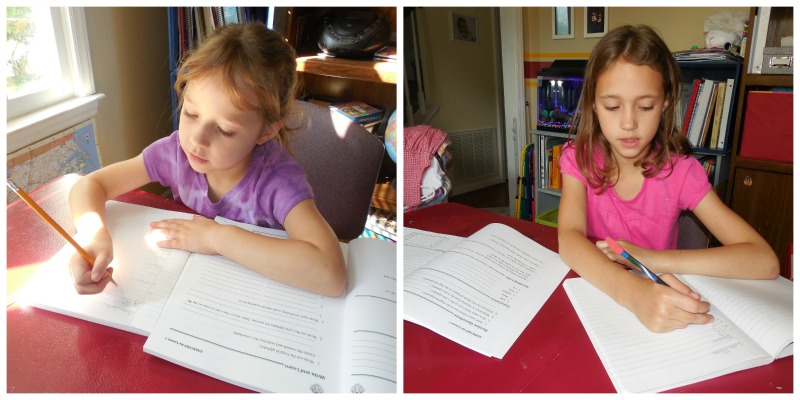
The first thing which I noticed, which thrilled Beth, was the coloring after each lesson. I have never known a child who loved to color as much as Beth. She colors several pages every day by choice in one of our many coloring books. Her previous handwriting instruction included coloring and that was usually her favorite part of the day! Combining coloring and handwriting is the perfect mix for her. She asks daily now if she can work on cursive and on the rare occasion I initiate cursive practice I am met with jumps and squeals. Seriously, I may have loved cursive, but this girl gets crazy excited about these lessons! 
I am also pleased with how young cursive instruction begins with Classical Conversations. Prescripts: Cursive Letters and Coloring is in intended for children ages 3-7. Three???? I love this! One of the challenges with handwriting for Beth in the past is that she always wanted to decorate her handwriting, adding curly cues, smiley faces, and hair to many of her printed letters. I hate to squelch her creativity, but this tends to drag handwriting out rather long and she is typically more concerned with her decorations than correct printing form. Teaching cursive younger removes this issue for a creative girl like Beth.
I also like that the letters are taught in a traditional ABC order. Our previous curriculum taught letters based on similar type, which made logical sense to me as an adult, but seemed to confuse my oldest daughter as we progressed through cursive the first time.. The capital letter is taught first, followed by the lower case of the same letter. In between is the previously mentioned coloring page. 

Beth was clearly ready for cursive instruction for her K-5 year, but I hesitated to begin because our old program encouraged waiting until 2nd or 3rd grade. I also know our public schools teach cursive in 3rd grade now. I am finding more and more freedom as I continue to homeschool realizing that just because something is traditionally taught at one level does not mean I cannot teach it sooner, or later if needed, at home. I plan to change handwriting curriculum and stick with Prescripts in our homeschool as we move forward. 

Check out more reviews here from my Crewmates! Photobucket

Teaching the Classics from Institute for Excellence in Writing: Review

 photo homepage_logo_zps79f1e89a.jpg

My favorite subject to teach is literature. In high school I couldn’t wait to go to my senior English class. Mrs. Moore had extremely high expectations, but she inspired me. She clearly loved literature with a passion, taught dynamically, and invested herself wholeheartedly in her students. She was a big part of why I pursued my own degree in education, focusing on teaching English to middle school kids. I am currently blessed beyond measure to teach a small group of middle school homeschoolers one day a week from September to May. I love this and am always looking for new ways to teach literature to my students. Since I am given permission to create my own units and choose which literature we study, I have great freedom to teach what I love.
 photo teachingclassics_zps99736e1d.jpg
I always felt literature had much more to offer students than mere literature studies have to offer. Adam and Missy Andrews agree, and have created a wonderful seminar published by Institute for Excellence in Writing called Teaching the Classics: A Socratic Method for Literary Education intended to teach you, the teacher. For $89.00 you receive this seminar taught at your convenience in your own home and includes all 6 sessions on 4 DVDs as well a workbook to use throughout the lessons. It is recorded during an actual seminar setting and you feel as if you are there. Andrew Moore’s dynamic style is engaging to watch and immediately drew me into the presentation.

Using actual literary examples Adam Andrews teaches a new way to look at teaching literature which breaks far away from the typical unit study of literature containing comprehension questions, vocabulary, and hands-on-activity. Adam begins by providing compelling arguments for the need to teach excellent literature in a way which benefits the student and creates a life-long learner. Although he didn’t need to sell me personally on this, I enjoyed his excellent debate for the need to provide young learners with a rich education in literature.

I was pleased to see this seminar shows how to teach the way I have always wanted to and aim to teach my students currently. I also love this is not simply for older students delving into great works of literature, but can be applied to even picture books with simplified questions. The biggest weakness I have when teaching is creating questions which require my students to think, not merely recall facts. I intend to greatly use the Socratic list of questions included in the workbook. While I have attempted to create questions which make my students think, I always felt as if I were falling short. There is value in comprehension questions, but they need to be followed by Socratic questions in order to stretch the student into deeper thinking.

I was also pleased with the description of conflicts. I learned a new conflict which I do not remember being taught in college or in my research as I structured my classes. This is particularly important to me because I discuss types of conflicts extensively with my students as this always promotes deeper thinking and excellent discussion.

I really like each teaching section is followed by a piece of “great literature” is read which gives opportunity for you to practically work through what is taught. This practical application allows the opportunity for you, the student, to see how this works in real-life. Literature by authors such as Beatrix Potter, Mark Twain, Rudyard Kipling, and Harper Lee are used for practice.

The basic elements of literature are discussed in order to teach the best way to teach great literature. The explanation of authorship, style, plot, conflict, setting, character, and theme were incredibly thorough and useful. I have gained some new insights in how to express them to my students as I introduce them as I teach.

Here are some of my favorite quotes from the seminar…

We need to “…understand the world from which the story came.”

On the application of using the Socratic List…”Now we have students who are thinkers”

About the Socratic List “Familiarity of these questions gained by long, continuous use, will make the understanding of difficult works easy.”

“The characters are the main link between the imaginary world and the author. The strength of the characters in the story and the author’s description of them…are the best way for the reader to enter the author’s world”

This is an excellent course no matter what level you are teaching. It will adequately equip you to create life-long readers who know how to think through literature beyond rote comprehension questions. Just based on this one course I have decided to further explore the writing curriculum at IEW for my girls.

Check out more reviews of this product and more from Institute for Excellence in Writing from my Crewmates!

Photobucket

Moving Beyond The Page: Review

 photo title_zps55bc9663.jpg

Good literature should inspire deeper learning. I have found this to be true of my daughters. When they read a good book, they are inspired to learn more. While my girls seem to naturally lean towards this tendency my experience full-time in the classroom has shown me not all children do. Moving Beyond the Page provides unique unit studies which provide interdisciplinary learning. For those who follow a delight-directed learning path there are so many options from which to choose!

The two units we reviewed covered Helen Keller and learning about sound. These two units were beautifully constructed to engage young learners in a way that makes the learning which occurs deeper and more comprehensive. The connections made between the science of hearing to Helen Keller’s story will last in my daughter’s mind for a long time.

The Helen Keller online unit is $22.87 and the Sound hard copy unit is $37.99. Both units were for the 7-9 year old age range, and there are materials available for ages 5-14 on the website. Each unit came with the needed literature and any hands-on supplements needed. Units vary in price based on the literature used and supplements which come with the unit. Each unit is intended to last around 1 month of learning and all literature units coincide with science and/or social studies. You can see and print sample curriculum by clicking here. Also available on the website are suggestions for reading and math so in essence you can find all you need to start homeschooling at Moving Beyond the Page!

My daughter really enjoyed reading Who Was Helen Keller? She knew of Helen Keller from a previous biography we read, but this one was much more engaging. I like that as we finished a portion I could check I had completed it online. I would have preferred an option of having the unit as entirely a pdf file as I don’t typically like to have the computer out during our instruction time. The worksheets were available as a pdf, but the lesson instructions were not.

Rose’s favorite activity was at the very beginning. She had to do some everyday tasks blindfolded and ears covered. I also put cotton balls in her ears. Although it wasn’t exactly like being deaf and blind, it gave her a small idea of what it was like for Helen Keller. This was such a fun way to start out the unit!

Another activity we used to learn sign language was a sign language DVD we already owned. We talked about how much harder it was for Helen since she could not see or hear.

So much is included in the unit. Fun activities, spelling, vocabulary and comprehension questions make up an excellent literature study which includes so much to make the learning experience fun!

Rose’s daddy helped her put together the 3D ear model included in the sound unit. This was not something she could have done on her own, but she did enjoy being part of the process.

The activities and information included in the sound unit for science were very enjoyable for my daughter. She learned how the ear works, how sound travels, and more! The hard-copy of this unit was beautifully bound so that just seeing the cover inspired my daughter to want to start learning right away. Also included was a biography about Alexander Graham Bell who we had not studied yet.

There were many worksheets, activities, and experiments included to aid in learning about sound and the human ear. Rose enjoyed making a musical instrument with her friend who had come over for the day. The girls worked diligently to make their homemade guitars just right.


They carried their instruments around all day and played all sorts of great music!

I like the combination of science with literature in order to engage learning. While I don’t typically use a unit study approach, I do like this for our summer studies. I have never combined a literature study with science before and I really liked doing so. It is so very important that my girls understand how all of life is incorporated together, not individual pockets of information. I love the many connections Rose made doing a literature and science study cohesively. .

Photobucket

Prima Latin from Memoria Press: Review

 photo mp_header_zps9aa8d9dc.jpg
Ever since I was in college I decided I was going to teach Greek and Latin to my students. This was when I discovered the connection to Greek and Latin and our own vocabulary. When I taught middle school English full-time they had roots each week and my current junior high homeschool English students I teach once a week also have roots to study and learn weekly. While I saw this as highly valuable for older students as they looked toward college, it honestly didn’t cross my mind to teach them to my own young daughters as part of our homeschool curriculum.
 photo PL_completeSet_zps91680a55.pngWhen the Prima Latin pakage from Memoria Press arrived my girls were jumping up and down! I told them we would be learning Latin and they couldn’t wait to start. This particular package is meant to be used with children in grades 2-4. The set costs $90.90 and includes a teacher’s guide, student guide, DVDs, CDs and flash cards. These items can also be purchased individually. 
I initially starts this with Rose who is finishing up 2nd grade. She has started to learn small amounts of Greek from her grandfather and was very excited to embark on this new adventure. I like the layout of the student books as they are easy to follow and very sequential. The first lesson focuses on learning the Latin alphabet which was a bit of a challenge for the vowels. 
Beth saw us doing our Latin lessons and she asked if she could try. We were only one lesson in at this point so I decided to give it a try on her own. She has just finished up Kindergarten and I wasn’t sure if she was ready….Boy did she give me a happy surprise! She quickly engaged with the text and seemed to really enjoy this lesson. The only part I modified a bit was to have her to more of the practice work in the book orally rather than written as her sister had done. 
Rose and Beth completed the first lesson on their own. After that first lesson the girls started working together on their Latin. This was a fun and unique experience because  I typically teach the girls individually on their own levels for different subjects. They enjoyed doing this work together. 
I would sit on the couch and teach the girls in the living room. They found some Latin words to be quite funny and would get a giggle out of them! We listened to the CD or DVD as the lessons indicated. 
The only portion of this program I did not care for as much was the teacher’s guide. It was basically the student guide with answers written in. With subjects I’m not as familiar with, like Latin, I prefer a more scripted book for the teacher’s guide. 
Don’t forget to check out more reviews from my Crewmates below!
Photobucket
 photo DisclaimerGraphic1_zpsf612f371.gif

Wild Cards~Baby Animals Around the World from Birdcage Press: Review

Birdcage Press Logo photo Birdcage-logo_zpsa3a9555b.jpg
I don’t know if it is because I have all daughters or because it is their age or I am just blessed, but all three of my children are infatuated with everything baby related. Nearly every time they play pretend a baby is involved with the family. They all croon over newborns and label everything as a Mama and baby…even inanimate objects! One of our favorite car games to play at the moment is identifying the names of baby animals I will call out a baby animal name and they have to figure out what the adult version is called. Needless to say we were all excited when we received Wild Cards: Baby Animals Around the World from Birdcage Press
Wild Cards - Baby Animals Around the World photo Birdcage-wildcardsbabyanimals_zps7f8bf6b3.jpgBirdcage Press specializes in learning games which an be found in the world’s finest museums covering a variety of topics including science, history, and art. These beautiful cards not only have stunning pictures, but are filled with interesting facts about each animal. Also included is a nice little book with even more information! To say my girls crave knowledge is an understatement. I could hardly tear them away from just reading these cards to play some of the suggested games. For only $10.95 this is a very high quality product. While it is intended for ages 6 and up all three of my girls (7, 5, and 3) enjoyed this set. 
The 28-page booklet also includes game ideas to use with the cards. This particular set has 3 pairs of animals from a variety of continents around the world. At the bottom of each card the other two corresponding animals are listed. Each continent represented also has a corresponding color and number for easier matching. 
Because there are two of each card go fish and old maid are easily played with this set. However my favorite game we played was reminiscent of rummy. Instead of simply searching for a match, we tried to get a set of animals from the same continent. This was a bigger challenge and was a more unique way to play. 
Grace really liked this game although my husband helped her out quite a bit. Our girls have played games of all varieties from the time they were about 15 months old. Sometimes in our laps, sometimes on their own, but always as a family. Grace often plays Go Fish with her sisters and she kept wanting to go that route, but she caught on once she and Daddy matched up a set. 
We inherited our love of game playing from our parents and are passing the tradition down to our girls! We’re always on the lookout for something new and unique. Kids games tend to be very similar, but this one was different than any other we have. The only downside was our game went rather slowly…but I can’t complain! The reason it took us forever to finish one game was because the girls couldn’t help but read and discover more about the animals on the cards in their hands!
Here is the proof of the real test of a product. My girls organized this game on their own. Beth asked if anyone wanted to play the Baby Animal Game, they got out their beanbag chairs, and played without us. While the girls enjoy games, they don’t typically play without us. It was fun to Rose and Beth help Grace along and see the have a good time making memories! 
Check out more reviews of this and other products from Bird Cage Press below from my Crewmates!
Photobucket
 photo DisclaimerGraphic1_zpsf612f371.gif

Christianity Cove’s 100 Simple Service Projects and Lord’s Prayer Lesson Pack: Review

  photo christianitycovelogo_zpsb3aa66f4.jpg
Our family has a long lineage of ministry. My great-grandfather, grandfather, and father were all full-time pastors. My husband’s grandfather and father were also full-time pastors. I think sometimes people get the impression this wonderful spiritual heritage automatically translates into endless ideas and creativity for teaching Scriptural truths to our kids. While learning about the Word of God is a part of our everyday lives, I’m not all that creative when it comes to unique ways to teach my girls. I am always on the lookout for new ideas and creative ways to teach. Christianity Cove is a fun company with a wide range of Sunday School and Children’s Church lessons, games, crafts, and songs. If you are stuck for ideas, this is an excellent place to go!
We reviewed two products from Christianity cove: 100 Simple Service Projects ($19.95) and Lord’s Prayer Lesson Pack ($19.99). There are products for all ages at Christianity Cove, but the two we reviewed are for elementary age children. 
 photo simpleserviceprojects_zps18d19d09.jpg
This short e-book is packed with creative ideas to serve. There are several categories and many ideas are listed in each. I like that there are so many ideas to fit the interest and needs of a variety of children. I also like that these are ideas which could be implemented with both large and small groups. Although I used this with my girls at home I plan to keep this in mind for the next time I’m teaching a group of kids at church.
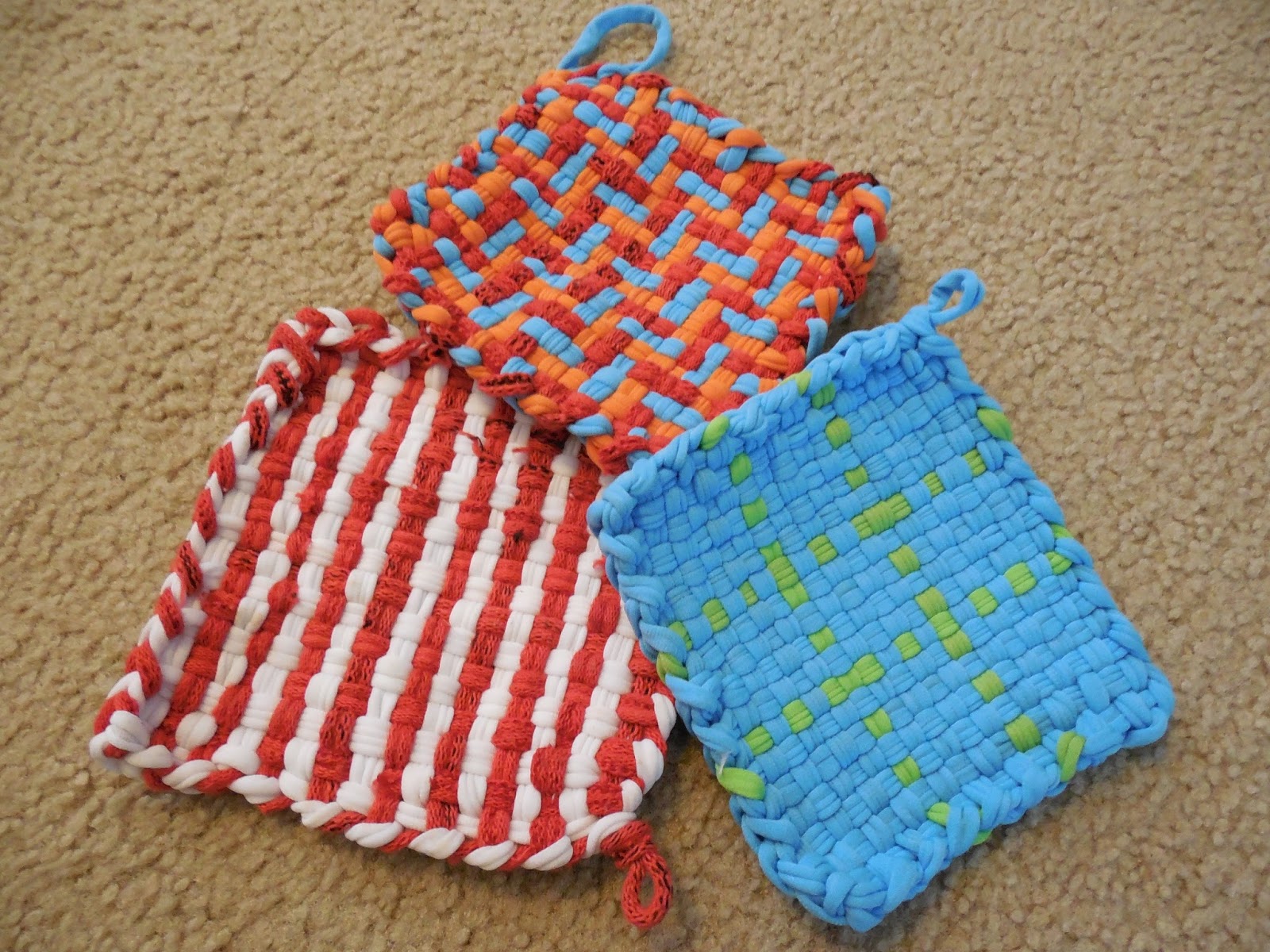
Some of the projects focus on volunteering and others on how to raise money for a cause. Rose opted to make a craft and earn money for missions. She has always had a heart for telling others about Christ and she loves hearing the missionaries at our annual missions conference at church. She has been making pot holders with a loom for a few months and she asked if she could sell them to friends and family to earn money for missions. Our church is helping raise money to start an Awana program in Chile. 
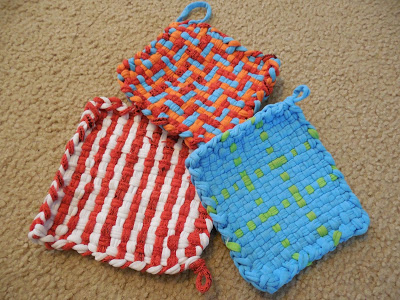
She is hard at work and has raised a modest amount from 11 pot holders so far. She is still excited about the project and still has orders coming in! The best part is she came up with this idea and what she wanted to do with the money she earned. We bought her first set of supplies to get her started, but she has also purchased more with her own money. This has been a great lesson in hard work, perseverance, and giving. She has been good to make sure her creations are well-made and has been churning them out rather quickly!
Ever since Rose was very young she has always had a heart to serve others. She especially loves to tell others about Christ and is always looking for new ways to share her faith with her friends. Her favorite time of year is our church’s missions conference and she usually sits completely enthralled as she listens to the missionary speakers each year.
 photo lordsprayerpin_zpsfed708a9.jpg
The girls loved learning the song for the Lord’s Prayer. You can hear us singing it if you click the player above. While this study on the Lord’s Prayer could be used over a few weeks I chose to spend an evening completing it. There are many options for activities, snacks, teaching ideas, and more! I love when curriculum gives you a variety of options because not everything will work in every situation. When I plan to teach a group of children I always over plan. So if i have an hour of teaching time, I plan for an hour and a half. You just never know when something won’t work or not take as long as expected.
First I taught the girls the song and then for the lesson portion I chose to explain how our prayers go to God in heaven just like balloons float up to the sky. Beth was a little nervous they would pop!
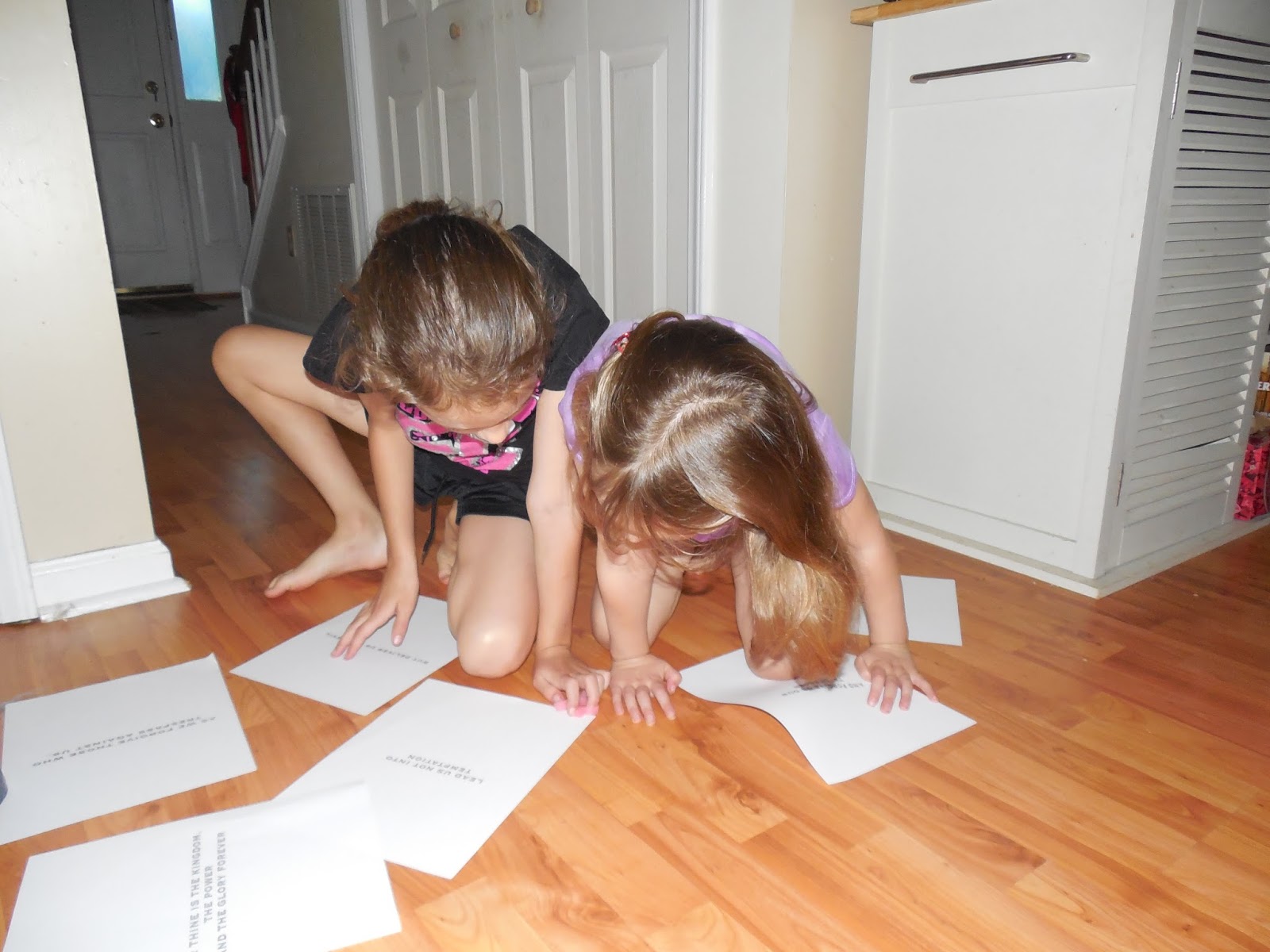
We sang the song again, then my ladies took the Lord’s Prayer mixed up onto different pages and put it in order. It took them a little while to get started, but once they found the first couple of parts they moved quickly! The materials needed for this study were minimal and easy to find around the house. These pages were already made and part of the unit.
This only took about 3 minutes…an example of what I mean by you never know what is going to happen! I didn’t anticipate the team-work factor and expected more at least 10-minutes long. Making the adjustment in homeschool is easy, but not as much in a group setting. It’s not big deal to finish early at home, but in a classroom down-time can spell disaster. I really appreciated the variety of activities so several extra could easily be prepared in advanced.
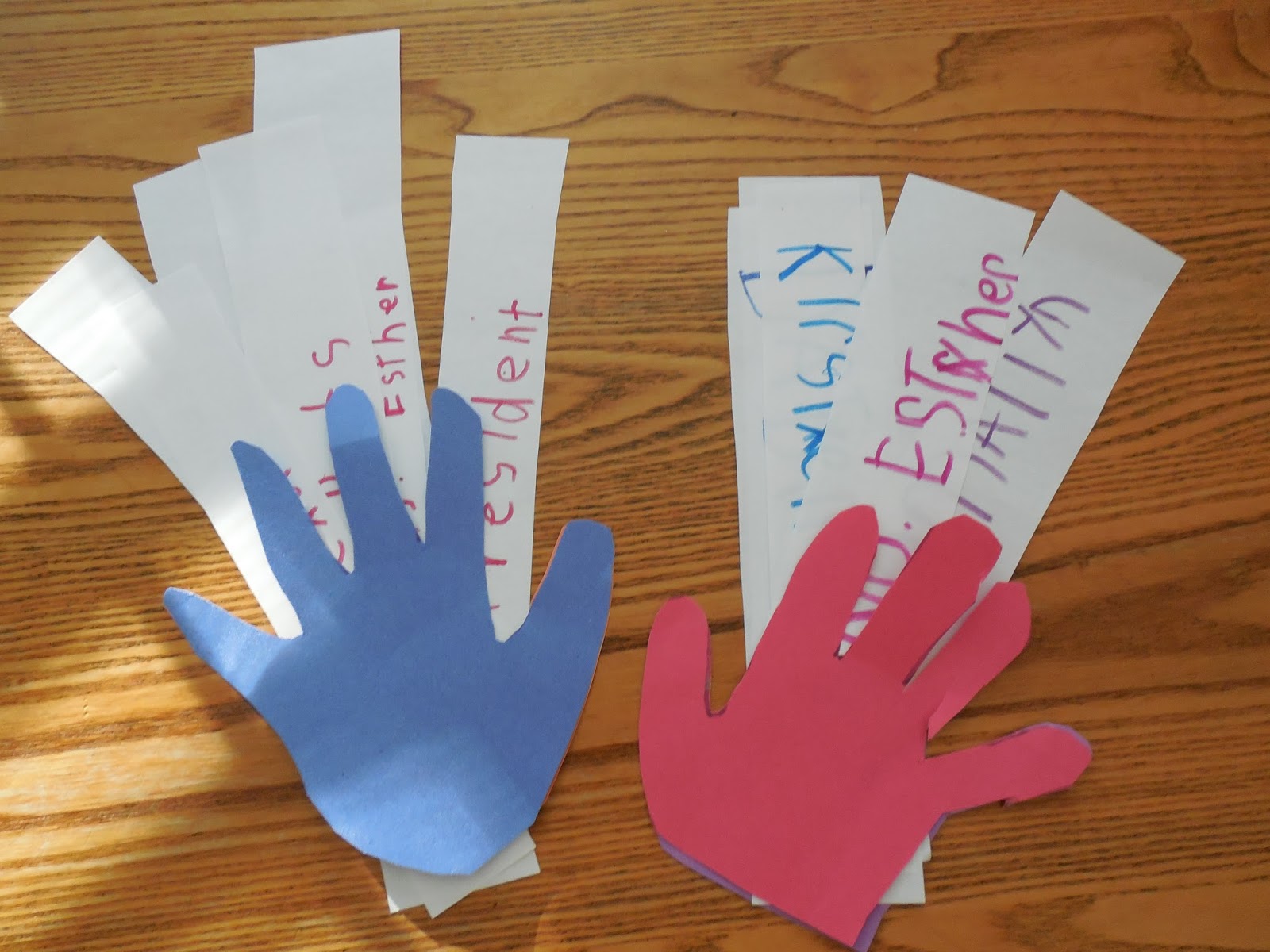
The craft we completed was a set of praying hands which the girls inserted their prayer requests into. I traced their hands and the girls cut the both out at the same time. They then glued the thumbs and pinky fingers together, leaving a pocket in the center.
We talked about praying for others and then they listed those individuals on slips of paper.

Grace joined us for our snack about prayer. As is typical for a 3 1/2-year-old she was not in the mood to participate at the time of our other activities. Cookies have a calming participation-encouraging affect in our house!
We talked about how sometimes we don’t feel like is right there. I took apart a cookie and told them that just like the icing sticks the two cookies together, our prayers stick us close to God. I really liked this parallel and it’s something I will definitely remember!
The Crew reviewed MANY more titles than these from Christianity Cove, so take some time to click through the reviews linked up below!
Photobucket

 photo DisclaimerGraphic1_zpsf612f371.gif

Math Mammoth’s Blue Series: Review

 photo logo_zps1488a12d.jpg
During my first official year of homeschooling for 1st grade I had curriculum overload. If you’ve never experienced this it is the inevitable phenomenon newbies face when their homeschool research begins. I have been told this usually occurs at the beginning either by way of the internet or a homeschool convention. Our journey began rather abruptly and I honestly didn’t have much time to research. I jumped in with both feet with only a few weeks notice and went with what our core curriculum suggested for math. This was fine until mid-year when it became clear our original math curriculum was not working. During my hours of research I found oodles of recommendations for Math Mammoth. Although this wasn’t the new curriculum I eventually chose I have always had it in the back of my mind, especially the Blue Series 

 photo lighblue_zps2ba8ce5b.jpg

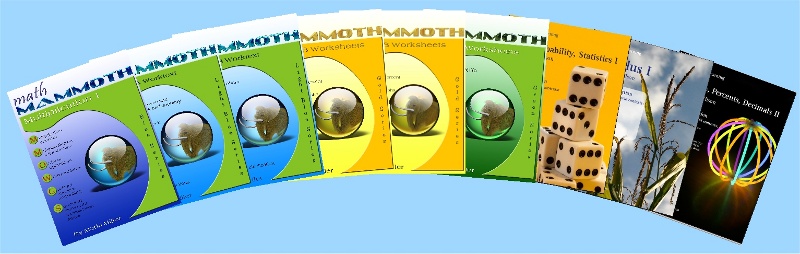
There are two ways you can purchase Math Mammoth. You can go the traditional grade-level route with the Light Blue Series. Topics are covered in a mastery format with only a few topics per grade. Conceptual thinking is encouraged and mental math and number sense are encouraged. This complete curriculum covers grades 1-6

 photo blueseries_zpsb625de99.jpg

I was looking for something to act more as a supplement since the mental math and conceptual approach did not work so well for us the first time around with the original curriculum. The Blue Series has separate topics you can purchase and complete as you wish. These are intended to be used as supplement, remediation, or review. Since I am happy with our current curriculum I appreciate that this program has different options depending on your needs.

These are the four units we reviewed…

U.S. Money

I used this with both Rose and Beth. This is the first time I’ve taught them the same subject at the same time and they seemed to enjoy it. I wouldn’t want to do it on a regular basis because I want each of my girls to move at their own pace without feeling pressured. Beth took a little longer to finish her independent work because she is a slower writer, but both girls worked fabulously through the portion of money which we covered.

I like the flexibility and encouragement to  use real coins. While printed pictures are fine, using real money give practical, real-life application. Since the girls wanted something to remain in the box on the page we did coin rubbings as they practiced making the correct change. You can also study money from different countries including Canadian, European, British, and Australian. 
I really liked this unit for learning more about money. It was a nice change from what we normally do and gave the girls different types of practice counting money. While there wasn’t anything incredibly new or different to me in the approaches used to teach the concepts, they were simple and easy to impart to the girls.
Clock

Beth worked with the clock unit on her own since Rose has basically mastered telling time. I really liked the combination of drawing on clocks and writing time. The combination of the two seemed to cement some time concepts we have been working on this year, but didn’t quite settle in. I love the ability to pace this unit alongside our current curriculum to give her a more solid footing in this area. 
Measurement 1

This unit was one both girls worked on together as well. While we have covered length and lightly touched on measurement, we have not formally covered measurements with our curriculum yet. A topical study was a nice place to start. 
Rather than jump right into types of measuring the unit begins by having the kids measure anything they choose with two different size shoes. Although this was an interesting start to the unit, I disliked the method. I would have preferred this concept be taught later, after the idea of concrete units of measure had been covered. The girls did enjoy the measuring activity though! 
Multiplication 1


Rose has been pestering me for a few months to start learning multiplication. I told her the basic idea, but didn’t want to formally cover this area until I felt she had a firm grasp on higher addition. She was over-the-moon excited when I told her we would be starting multiplication before she reached it in our curriculum. 
Although I didn’t care for the conceptual start for measurement, I did like it for the beginning steps to learn multiplication. Understanding what multiplication means seems the most logical place to start. Although I think Rose already understood these concepts seeing her formally work through it on paper gave me assurance she knew what she was doing. She is so excited to work through this unit that she often asks to work further after our official school-time is over. 

Teacher’s editions of math books are typically needed and sometimes I’ve wished there was a manual for the teacher’s book! This is not needed with Math Mammoth. There were several times when I really felt I could have let my girls learn many of these concepts on their own. This is a very user-friendly curriculum for both teacher and student.

To read more reviews about Math Mammoth including the other curricula offered click below! 

Photobucket
 photo DisclaimerGraphic1_zpsf612f371.gif