Children’s Atlas of God’s World from Master Books: Review

I’m so incredibly excited to be posting my first review for the Moms of Master Books team! Being part of this team has been one of my hopes since shortly after beginning my blog. Master Books has become my favorite publishing company since beginning homeschooling and being part of their review team is simply a dream come true!

This first book I’m reviewing is the Children’s Atlas of God’s World from Master Books (a division of New Leaf Publishing). The first place I go to now for my geography, history, and science resources in Master Books, but I hadn’t considered an atlas from a Christian worldview before. For the most part a traditional atlas will give factual information rather than that from a secular perspective, so I was curious to see what one from a biblical perspective would hold different. Boy was I excited when I found out!

The book is divided into continent sections where an overview of the continent is given. Following this page several of the countries are highlighted. For each country the statistics are listed as well as the country’s flag, map and beautiful pictures of the area. Historical and geographical information is provided in a child-friendly manner in short paragraphs, easy for young readers to explore on their own. Another aspect I like is the inclusion of biomes which teaches more about the land and climate of the region.

My favorite part is the inclusion of Christian History and traditions. With this information children are told when missionaries first arrived as well as how God is working in the country. This is a blessing in our home because missions is something we are very passionate about. In addition to using this in our home, I plan to take this to our monthly women’s meeting where we focus on missionaries and their work around the world. This year I’ll be heading up a portion of the meeting designed to help our children become more mission-minded. This Atlas will give me a great starting point for discussion with the kids in our church about the world and missionaries.

This Atlas will be a great resource to any home whether you homeschool or not. The beautiful pictures compliment the accurate and interesting information. I’ve enjoyed reading it as much as my girls! Master Books has scored once again with another new resource for kids to explore the world around them from a Christian worldview.

Disclaimer: I received the Children’s Atlas of God’s World as part of the Moms of Master Books Team. I was not required to give a positive review. I was not compensated in any other way. 

Arithmetic Village: Review

Have you ever wished math could be, well, less math-like? My husband loves the predictability of numbers and operations whereas I feel stifled when I look at a page full of numbers. For us right-brainers math can feel tedious and in need of a giant boost of something creative. I stumbled across something wonderful one day as I browsed Facebook: Arithmetic Village…math for the right-brains!

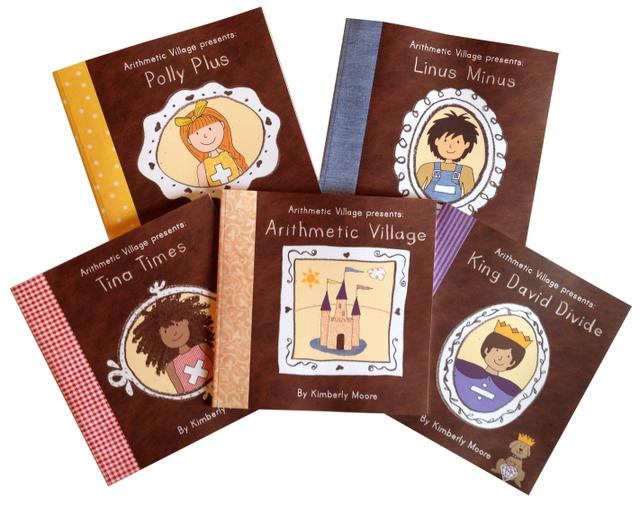
Arithmetic Village is a series of beautifully illustrated books which teach mathematical concepts in a very creative and unique way. Children learn mathematics with hands-on activities which excite and engage like no other math manipulative I have seen. While this is not a stand-alone mathematics curriculum it is a wonderful supplement to any curriculum out there and is especially perfect for the right-brained learner. The unique blend of story-telling, rhyme, role-play, and tactile learning experience makes children want to do math!

The five books in the series cover place value, addition, subtraction, multiplication, and division inviting children to actively participate in the learning rather than just be told what each operation means. In addition to being beautifully illustrated these sweet stories are told in rhyme which often creates a more memorable learning experience for children. 
Are you intrigued yet?
You can purchase hard-copies of the books or printable pdf files with directions. Be aware this will take a large amount of ink, particularly yellow, if you want them to turn out nicely. The pdf files also must be cut and bound by hand, but the payoff for this effort to make them nice is well worth it! 
My sweet husband bought me a new paper cutter for this project…and then I convinced him to cut them for me. Left-brain precision at its finest! We used card stock and a long stapler for binding. There are directions for printing here as well as how to sew the binding by hand.
First the children decorate their treasure box. Since there are three little girls in our house I opted for a larger treasure box for us all to use together. I used wedding favor bags and red vase gems from Walmart for the jewels and bags. All five books and 10 sacks of 10 gems fit neatly inside. I also have a small basket of loose gems in the box and as soon as I have a chance I’m going to add in several miniature treasure chests. The girls loved decorating the box. I used tissue paper and modge podge to give it a stained glass look and we added on the lettering with stickers we already had. 
Now that the box is done, let the fun begin!

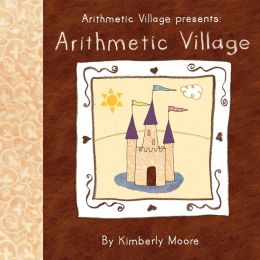
I read the girls the first story in the set, Arithmetic Village. Then we acted out what the story told of gems falling from the sky while the villagers slept, the villagers collecting the jewels and putting 10 in each sack, and delivering sacks to the king. Grace and Beth especially liked this part. Grace is three and has been counting well for a while now. She was excited to show off her counting skills! This first book introduces the ideas and main characters who reside in Arithmetic Village and will reoccur later in the series. 
Each of the following books deal with a different ma thematic operation. We found out more about Polly Plus, Linus Minus, Tina Times, and King David Divide as we read through the series. The girls enjoyed the stories immensely and have read them several times on their own. 
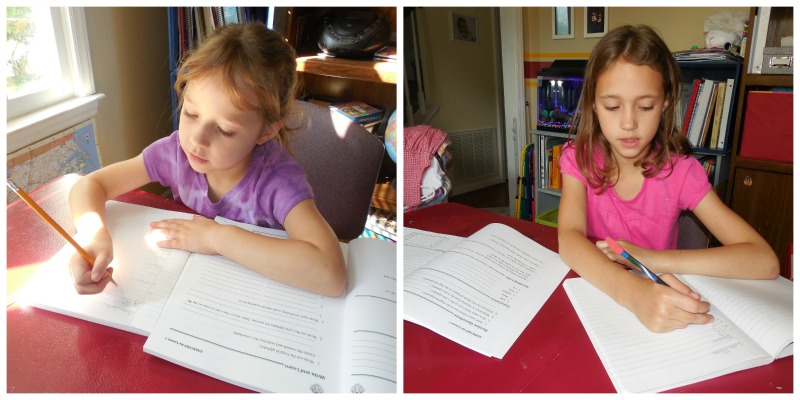
Another wonderful aspect of these unique learning tools is the variety of free ideas and activities provided through the Arithmetic Village website, blog, youtube channel, facebook page, twitter page, and pinterest page. You will never run out of ideas! We used several of the printable work pages to aid in our learning endeavor. Here Beth is practicing place value by using the rules learned in Arithmetic Village and the printable worksheet available on the website. 

Rose and Beth took turns helping Grace learn to add and subtract. It was so much fun seeing Grace begin to understand the concepts of addition and subtraction at 3 years old. I wish I’d had this resource when my older girls were just starting out with mathematics instruction! 
Our family has been greatly blessed by this wonderful resource and I know yours will be too. Math manipulatives are known for helping understand concepts, but I have yet to see one which engages my girls as much as Arithmetic Village has. How do I know they love it? I’ve been asked, “Mommy, can we play with the treasure chest and gems again? Where are the books?” almost daily. I think this resource should be in every homeschool and classroom and will greatly benefit every child whether they are right-brained or left-brained! 
Have you used Arithmetic Village? What is your favorite part of this resource? 

Disclaimer
I received the Arithmetic Village series in pdf form in exchange for my honest review. I was not required to write a positive review. No other compensation was received.

PreScripts Cursive Letters and Coloring from Classical Conversations: Review

Logo photo classicalconversationslogo_zps461acbc8.jpg
There is much debate currently over whether cursive is relevant to our tech-savvy society. Advocates on both sides spout figures, facts, and passionate discourse. My reasons for firmly staying the course with cursive have nothing to do with the latest trend in education or the movement from homeschoolers to teach more traditional subjects public schools ignore. My reasons are much more personal. One of my most treasured belongings is my grandmother’s cookbook. I discovered after receiving this that there were several handwritten recipes she had tucked away into this book. Although I can’t talk with her anymore because she came face-to-face with Jesus when I was just a little girl, I feel as if she is chatting with me as I read over her recipes, hastily written on whatever was nearest. I know she probably didn’t think her granddaughter would be saving and cherishing these handwritten mementos, but they are so very dear to me. I want my daughters to be able to read these and other inscriptions from their own history. 
 photo classicalConversations-lettersandcoloring_zpseefb78a5.gifChoosing a handwriting course is as daunting as choosing reading instruction! While I have been satisfied with our current books, I hadn’t yet felt overwhelmingly in love with them as I am with some of our other curriculum. I was excited to review Prescripts: Cursive Letters and Coloring from Classical Conversations. I have a good friend who uses Classical Conversations for their core curriculum. I knew it would be solid and I was interested to see how it differed from our current handwriting curriculum. 
The first thing which I noticed, which thrilled Beth, was the coloring after each lesson. I have never known a child who loved to color as much as Beth. She colors several pages every day by choice in one of our many coloring books. Her previous handwriting instruction included coloring and that was usually her favorite part of the day! Combining coloring and handwriting is the perfect mix for her. She asks daily now if she can work on cursive and on the rare occasion I initiate cursive practice I am met with jumps and squeals. Seriously, I may have loved cursive, but this girl gets crazy excited about these lessons! 
I am also pleased with how young cursive instruction begins with Classical Conversations. Prescripts: Cursive Letters and Coloring is in intended for children ages 3-7. Three???? I love this! One of the challenges with handwriting for Beth in the past is that she always wanted to decorate her handwriting, adding curly cues, smiley faces, and hair to many of her printed letters. I hate to squelch her creativity, but this tends to drag handwriting out rather long and she is typically more concerned with her decorations than correct printing form. Teaching cursive younger removes this issue for a creative girl like Beth.
I also like that the letters are taught in a traditional ABC order. Our previous curriculum taught letters based on similar type, which made logical sense to me as an adult, but seemed to confuse my oldest daughter as we progressed through cursive the first time.. The capital letter is taught first, followed by the lower case of the same letter. In between is the previously mentioned coloring page. 

Beth was clearly ready for cursive instruction for her K-5 year, but I hesitated to begin because our old program encouraged waiting until 2nd or 3rd grade. I also know our public schools teach cursive in 3rd grade now. I am finding more and more freedom as I continue to homeschool realizing that just because something is traditionally taught at one level does not mean I cannot teach it sooner, or later if needed, at home. I plan to change handwriting curriculum and stick with Prescripts in our homeschool as we move forward. 

Check out more reviews here from my Crewmates! Photobucket

Teaching the Classics from Institute for Excellence in Writing: Review

 photo homepage_logo_zps79f1e89a.jpg

My favorite subject to teach is literature. In high school I couldn’t wait to go to my senior English class. Mrs. Moore had extremely high expectations, but she inspired me. She clearly loved literature with a passion, taught dynamically, and invested herself wholeheartedly in her students. She was a big part of why I pursued my own degree in education, focusing on teaching English to middle school kids. I am currently blessed beyond measure to teach a small group of middle school homeschoolers one day a week from September to May. I love this and am always looking for new ways to teach literature to my students. Since I am given permission to create my own units and choose which literature we study, I have great freedom to teach what I love.
 photo teachingclassics_zps99736e1d.jpg
I always felt literature had much more to offer students than mere literature studies have to offer. Adam and Missy Andrews agree, and have created a wonderful seminar published by Institute for Excellence in Writing called Teaching the Classics: A Socratic Method for Literary Education intended to teach you, the teacher. For $89.00 you receive this seminar taught at your convenience in your own home and includes all 6 sessions on 4 DVDs as well a workbook to use throughout the lessons. It is recorded during an actual seminar setting and you feel as if you are there. Andrew Moore’s dynamic style is engaging to watch and immediately drew me into the presentation.

Using actual literary examples Adam Andrews teaches a new way to look at teaching literature which breaks far away from the typical unit study of literature containing comprehension questions, vocabulary, and hands-on-activity. Adam begins by providing compelling arguments for the need to teach excellent literature in a way which benefits the student and creates a life-long learner. Although he didn’t need to sell me personally on this, I enjoyed his excellent debate for the need to provide young learners with a rich education in literature.

I was pleased to see this seminar shows how to teach the way I have always wanted to and aim to teach my students currently. I also love this is not simply for older students delving into great works of literature, but can be applied to even picture books with simplified questions. The biggest weakness I have when teaching is creating questions which require my students to think, not merely recall facts. I intend to greatly use the Socratic list of questions included in the workbook. While I have attempted to create questions which make my students think, I always felt as if I were falling short. There is value in comprehension questions, but they need to be followed by Socratic questions in order to stretch the student into deeper thinking.

I was also pleased with the description of conflicts. I learned a new conflict which I do not remember being taught in college or in my research as I structured my classes. This is particularly important to me because I discuss types of conflicts extensively with my students as this always promotes deeper thinking and excellent discussion.

I really like each teaching section is followed by a piece of “great literature” is read which gives opportunity for you to practically work through what is taught. This practical application allows the opportunity for you, the student, to see how this works in real-life. Literature by authors such as Beatrix Potter, Mark Twain, Rudyard Kipling, and Harper Lee are used for practice.

The basic elements of literature are discussed in order to teach the best way to teach great literature. The explanation of authorship, style, plot, conflict, setting, character, and theme were incredibly thorough and useful. I have gained some new insights in how to express them to my students as I introduce them as I teach.

Here are some of my favorite quotes from the seminar…

We need to “…understand the world from which the story came.”

On the application of using the Socratic List…”Now we have students who are thinkers”

About the Socratic List “Familiarity of these questions gained by long, continuous use, will make the understanding of difficult works easy.”

“The characters are the main link between the imaginary world and the author. The strength of the characters in the story and the author’s description of them…are the best way for the reader to enter the author’s world”

This is an excellent course no matter what level you are teaching. It will adequately equip you to create life-long readers who know how to think through literature beyond rote comprehension questions. Just based on this one course I have decided to further explore the writing curriculum at IEW for my girls.

Check out more reviews of this product and more from Institute for Excellence in Writing from my Crewmates!

Photobucket

FREE Book Friday with Master Books!

I’m so excited to host FREE Book Friday for Master Books (a division of New Leaf Publishing) this week! I have come to rely on this company to teach me truth as I have slowly come to understand my grade school education was filled with the errors of evolution. I’ve been slowly creating a Creation library for our family and have has the Answers Books on my wish list!

I’m so excited to give you the opportunity to win The Answers Book 2 by Ken Ham. I have learned so much as I read this. I knew no matter what my teachers told me, evolution was incorrect. What I struggled with was the absolute certainty many of them presented their so-called facts with. I was also completely unaware of the evolutionary teaching permeating so many other subjects…history, humanities, and even literature were frequently impacted by this false teaching. This book presents factual evidence which systematically breaks down all of the errors in evolution.

I appreciate that Ken Ham states up front that unless you start with the assumption the Bible is 100% accurate, you will not agree with this book. At the same time he presents compelling scientific arguments and facts which cannot logically be disputed. I was especially fascinated with the chapter which dicussed Stanley Millers experiments which resulted in the creation of amino acids in a laboratory. I was appalled to learn what I had been taught was absolute fact is in reality highly suspect evidence at the very least. The true results of this experiment as presented in the book in fact prove more for creation than evolution. How blessed I have been to read truth and arm myself with knowledge so I can discuss the topic of creation vs. evolution intelligently.

I wish everyone could win, but since this isn’t possible make sure to add this series to your wishlist for your own library!

 a Rafflecopter giveaway

Disclaimer
I received The New Answers Book 2 in exchange for my honest review. I was not required to write a positive review. No other compensation was received.

All About Spelling $50 Giveaway!

I’ve raved over All About Spelling from All About Learning Press in many of my posts. I honestly can’t say enough good things about it!

I came into homeschooling being labeled as a “poor speller” and it caused me great concern. It didn’t matter that I graduated from high school 10th in my class of 405, or that I entered college with 18 course credits from my AP classes or that I excelled in college and graduated magna cum laude with my degree in middle grades education. None of that mattered. I had been told early on in my education that I was a poor speller and I just needed to study harder. I did study. I studied a lot. Spelling was still hit or miss with me. No matter how had I tried this was my main struggle in elementary school and I dreaded the yearly spelling bees since I rarely made it past the first round just within my classroom!

What a relief when middle school came and spelling was no longer required! It was also about that time that computers were becoming more main-stream and they included spell-checker, so I basically gave up trying. Why should I try when I had basically been told I wasn’t going to ever increase my spelling ability? The irony of it all was that my reading level was much higher than most of my peers. I was told high level readers usually translated into high level spellers. So what was wrong with me?

No one ever taught me the rules. Rules? There are rules for spelling? Except for “i before e except after c (and a bunch of exceptions we don’t have a rule for)” I don’t remember learning any rules. All About Spelling has changed my entire understanding of this subject. I searched it out when my oldest, an excellent reader, was clearly not transitioning to spelling easily. Rather than giving up, I started researching. I prayed for wisdom then scoured the internet, read numerous catalogs, and asked veteran homeschooling moms their recommendation. I settled on All About Spelling and haven’t looked back!

Since then spelling has only become more and more fun! Here is an update on my two girls using All About Spelling…
Beth…

Beth finished up her Kindergarten year a little over half-way through All About Spelling Level 1. I could have pushed her a little faster because she loved it and it seemed easy, but I chose to do only 1 lesson about every 2 weeks, practicing just a little bit each day. This worked well for her and I plan to up the pace a bit in the fall. She’ll continue some through the summer to guarantee retention. 
Something knew we tried and love is spelling using alphabet stamps in addition to the tiles. I try to switch ti up for fun. I always use the tiles for teaching and the first set of words we work on, but I try to switch it up some after that. 
Another unexpected benefit for Beth has been improvement in handwriting. She really wanted to use a traditional notebook like her sister and in doing so, her handwriting has started becoming more mature. What a fun transformation to see this year! 
Rose…

Rose finished up 2nd grade and I am thrilled with her progress. We are about 1/4 the way through level 3 and will also continue during the summer. She used to ask me how to spell very short words she should not have a problem with, she now rarely asks how to spell anything, or tries it first and then just asks me to check it. I have also caught her making her own corrections. This is HUGE! She would frequently flip 2 letters and now she is seeing it. What a blessing All About Spelling has been for her! She especially likes finding Silent E in words and deciding which rule it follows. 
She also really enjoys using the homophones book. It is divided into grade-level appropriate practice. She has only done a few of the pages, but she now quickly recognizes homophones.
Although we do uses the tiles for teaching, Rose never uses them for spelling practice now. It is faster for her to write and since she likes that better it is fine with me! She also has improved her cursive as a result. The transition for a student from copying cursive to writing their own words can sometimes be tricky. All About Spelling has been a good medium to make this transition. We still have some work to do here, but she’s definitely well on her way! 
Don’t forget to enter the giveaway!

a Rafflecopter giveaway

Moving Beyond The Page: Review

 photo title_zps55bc9663.jpg

Good literature should inspire deeper learning. I have found this to be true of my daughters. When they read a good book, they are inspired to learn more. While my girls seem to naturally lean towards this tendency my experience full-time in the classroom has shown me not all children do. Moving Beyond the Page provides unique unit studies which provide interdisciplinary learning. For those who follow a delight-directed learning path there are so many options from which to choose!

The two units we reviewed covered Helen Keller and learning about sound. These two units were beautifully constructed to engage young learners in a way that makes the learning which occurs deeper and more comprehensive. The connections made between the science of hearing to Helen Keller’s story will last in my daughter’s mind for a long time.

The Helen Keller online unit is $22.87 and the Sound hard copy unit is $37.99. Both units were for the 7-9 year old age range, and there are materials available for ages 5-14 on the website. Each unit came with the needed literature and any hands-on supplements needed. Units vary in price based on the literature used and supplements which come with the unit. Each unit is intended to last around 1 month of learning and all literature units coincide with science and/or social studies. You can see and print sample curriculum by clicking here. Also available on the website are suggestions for reading and math so in essence you can find all you need to start homeschooling at Moving Beyond the Page!

My daughter really enjoyed reading Who Was Helen Keller? She knew of Helen Keller from a previous biography we read, but this one was much more engaging. I like that as we finished a portion I could check I had completed it online. I would have preferred an option of having the unit as entirely a pdf file as I don’t typically like to have the computer out during our instruction time. The worksheets were available as a pdf, but the lesson instructions were not.

Rose’s favorite activity was at the very beginning. She had to do some everyday tasks blindfolded and ears covered. I also put cotton balls in her ears. Although it wasn’t exactly like being deaf and blind, it gave her a small idea of what it was like for Helen Keller. This was such a fun way to start out the unit!

Another activity we used to learn sign language was a sign language DVD we already owned. We talked about how much harder it was for Helen since she could not see or hear.

So much is included in the unit. Fun activities, spelling, vocabulary and comprehension questions make up an excellent literature study which includes so much to make the learning experience fun!

Rose’s daddy helped her put together the 3D ear model included in the sound unit. This was not something she could have done on her own, but she did enjoy being part of the process.

The activities and information included in the sound unit for science were very enjoyable for my daughter. She learned how the ear works, how sound travels, and more! The hard-copy of this unit was beautifully bound so that just seeing the cover inspired my daughter to want to start learning right away. Also included was a biography about Alexander Graham Bell who we had not studied yet.

There were many worksheets, activities, and experiments included to aid in learning about sound and the human ear. Rose enjoyed making a musical instrument with her friend who had come over for the day. The girls worked diligently to make their homemade guitars just right.


They carried their instruments around all day and played all sorts of great music!

I like the combination of science with literature in order to engage learning. While I don’t typically use a unit study approach, I do like this for our summer studies. I have never combined a literature study with science before and I really liked doing so. It is so very important that my girls understand how all of life is incorporated together, not individual pockets of information. I love the many connections Rose made doing a literature and science study cohesively. .

Photobucket

Indoctrination the Book: Review

My husband and I recently watched an old television show which first aired in the 1970’s. In this particular episode both parents go to see their son’s principal because they know he should not be passing his junior year of high school, yet he has all C’s. The principal tries to convince the parents this is fine because the school doesn’t have any money and the only way to get more money is to graduate a certain percentage of students on to the next grade. The principal said it should be up to their son. When he chose to go on to the next grade, they were understandable upset, but it was what he chose, so they just tried to make him feel guilty. In the end he said, “Well, I’m going to do better next year.” Laugh track starts…lights fade…
The laughing has stopped and the light of truth now exposes the glaring reality of public education through brave voices like those who wrote IndoctriNation, the companion book to the documentary by the same title. The book is written as a collection of short essays from many of the individuals featured in the film. I have not yet seen the film, but I believe this is better as a companion rather than simply read alone.

I appreciated the calm, factual way information is presented in IndoctriNation. Even the skeptic reading this should not get the sense it is written by a fringe group of conspiracy mongers. Rather the book systematically provides factual information which is lies just beneath the surface. Yes, the ideas presented here are radically opposed by the mainstream voices. Our country was founded by radical opposition.

What I agreed with…
* Schools in general are not what we are led to believe they are.
* Teachers have essentially lost all rights and free speech
* Students are not ensured emotional or physical safety in our schools
* There was an agenda when public schools were created and there still is one today which goes far beyond providing quality education.
* There is an over-drugging of students, especially boys, who are just being the way God created boys to be.

What I disagreed with…
* There is a biblical mandate to homeschool
* In general Christian schools are not much better off than public schools
* Parents who do not homeschool are not living in obedience to God

Overall I highly recommend this book, but as I mentioned is is written as a collection of essays by many authors and as such holds a variety of views. While each chapter strongly advocates homeschooling, some go further and state this is a biblical mandate. My husband, a pastor, and I discussed this extensively and we do not see this as black and white and some do. Here are our conclusions…

1. Spiritual and academic education are inherently intertwined whether we like it or not.
2. Public education does address the spiritual side of education no matter how much they deny this fact. It’s just a different spirituality than we want for our girls.

Every parent ought to be armed with this information so they can make the best decision for their child’s education. For financial reasons Christian schools are out of the reach of many. For life-circumstance situation homeschooling is out of the reach of many. It is becoming easier and easier to homeschool, but for single-parents or families with one or more parents with physical needs it can be nearly impossible.

I encourage all Christian parents to read this book and watch the documentary (we plan to soon!) whether you plan to homeschool, attend private school, or attend public school. Knowledge is our best defense against a system and environment currently doing more harm than good. The breakdown in education is so much more than low test scores, more than just school shootings, more than what the politicians want you to believe.

No laugh tracks.
No fade out.

Just reality this stark reality: There is an ungodly undercurrent behind the politics of education which no amount of Christian influence in the schools can prevent. It is up to the informed to decide what to do about it, especially those with children.

Check out some more reviews by clicking the image below! 
Disclaimer
I received IndoctriNation in exchange for my honest review. I was not required to write a positive review. No other compensation was received.

Prima Latin from Memoria Press: Review

 photo mp_header_zps9aa8d9dc.jpg
Ever since I was in college I decided I was going to teach Greek and Latin to my students. This was when I discovered the connection to Greek and Latin and our own vocabulary. When I taught middle school English full-time they had roots each week and my current junior high homeschool English students I teach once a week also have roots to study and learn weekly. While I saw this as highly valuable for older students as they looked toward college, it honestly didn’t cross my mind to teach them to my own young daughters as part of our homeschool curriculum.
 photo PL_completeSet_zps91680a55.pngWhen the Prima Latin pakage from Memoria Press arrived my girls were jumping up and down! I told them we would be learning Latin and they couldn’t wait to start. This particular package is meant to be used with children in grades 2-4. The set costs $90.90 and includes a teacher’s guide, student guide, DVDs, CDs and flash cards. These items can also be purchased individually. 
I initially starts this with Rose who is finishing up 2nd grade. She has started to learn small amounts of Greek from her grandfather and was very excited to embark on this new adventure. I like the layout of the student books as they are easy to follow and very sequential. The first lesson focuses on learning the Latin alphabet which was a bit of a challenge for the vowels. 
Beth saw us doing our Latin lessons and she asked if she could try. We were only one lesson in at this point so I decided to give it a try on her own. She has just finished up Kindergarten and I wasn’t sure if she was ready….Boy did she give me a happy surprise! She quickly engaged with the text and seemed to really enjoy this lesson. The only part I modified a bit was to have her to more of the practice work in the book orally rather than written as her sister had done. 
Rose and Beth completed the first lesson on their own. After that first lesson the girls started working together on their Latin. This was a fun and unique experience because  I typically teach the girls individually on their own levels for different subjects. They enjoyed doing this work together. 
I would sit on the couch and teach the girls in the living room. They found some Latin words to be quite funny and would get a giggle out of them! We listened to the CD or DVD as the lessons indicated. 
The only portion of this program I did not care for as much was the teacher’s guide. It was basically the student guide with answers written in. With subjects I’m not as familiar with, like Latin, I prefer a more scripted book for the teacher’s guide. 
Don’t forget to check out more reviews from my Crewmates below!
Photobucket
 photo DisclaimerGraphic1_zpsf612f371.gif

4D Heart Model from Tedco Toys:Review and giveaway!!!!

I’ve been on the search for high-quality science manipulatives to encourage exploration and curiosity. I don’t follow a science curriculum during the school-year because my daughters are blessed to take a science class once a week starting in 1st grade. At the same time I don’t want to completely ignore science at home. Therefore I’ve been systematically collecting and searching for good things to encourage their natural curiosity for how things work.

One of the newest items I’ve come across are the 4-D Anatomy Human Anatomy Models from Tedco Toys. Their company motto is, “Where Imagination Has No Boundaries.” I love this! Our house is full of whys these days and much of it centers around science. My girls definitely do not have boundaries on their imagination and I love that the toys from this company are designed to encourage that. 
We have put together two 4-D models from Tedco Toys. The first was the human ear and the second the human heart. I say we, but I’ll be honest and tell you my husband is actually the one who put both models together with my daughter as I snapped the pictures. They come with directions and are meant to be a puzzle. The direction booklet also contains and large amount of information to engage with more learning. My oldest daughter is only 7, so putting this together on her own wouldn’t have worked. I believe older students, especially middle school and high school, would be able to manage fine on their own. 
Just upon opening the box my daughter was so excited to learn what each piece was for and how it all went together! I love how neatly arranged it is. 
My husband did say the only difficult part about following the directions was that some pieces were already put together which wasn’t always indicated on the paper. . The directions are simply pictures so there is an element of problem solving needed to figure out exactly how the pieces fit together. 
My daughter enjoyed watching and held some of the pieces for her daddy as they put the models together. She curiously asked all sorts of questions which makes it worth all the hard work!
These are our completed models. It took about 15-20 minutes for my husband to put them together completely and they turned out so beautiful! Unlike other models I have seen the pieces are easily removed for further investigation. This is a unique feature which will certainly provide hours of learning inspired by curiosity. 
I also like how the heart opens up. My youngest daughter has an extra pulmonary artery discovered a few months after her birth. While it is a fairly common and minor defect it is something we will keep an eye on as she grows and she should be aware of as she gets older. This will be an excellent tool in explaining the unique feature God has given her.
Would you like to win this beautiful heart model? Tedco Toys is generously donating one to one of my blessed readers! Enter below with the Rafflecopter form below. 

a Rafflecopter giveaway

Disclaimer
I received the 4D heart model in exchange for my honest review from Tedco Toys. I was not required to write a positive review. No other compensation was received.